Glass 10 min read
Glass Fusing Kiln Guide: What to Buy and What to Skip
How to choose a glass fusing kiln for home or studio. 120V vs 240V, clamshell vs top-load, Skutt vs Evenheat vs Paragon, and which size fits your work.
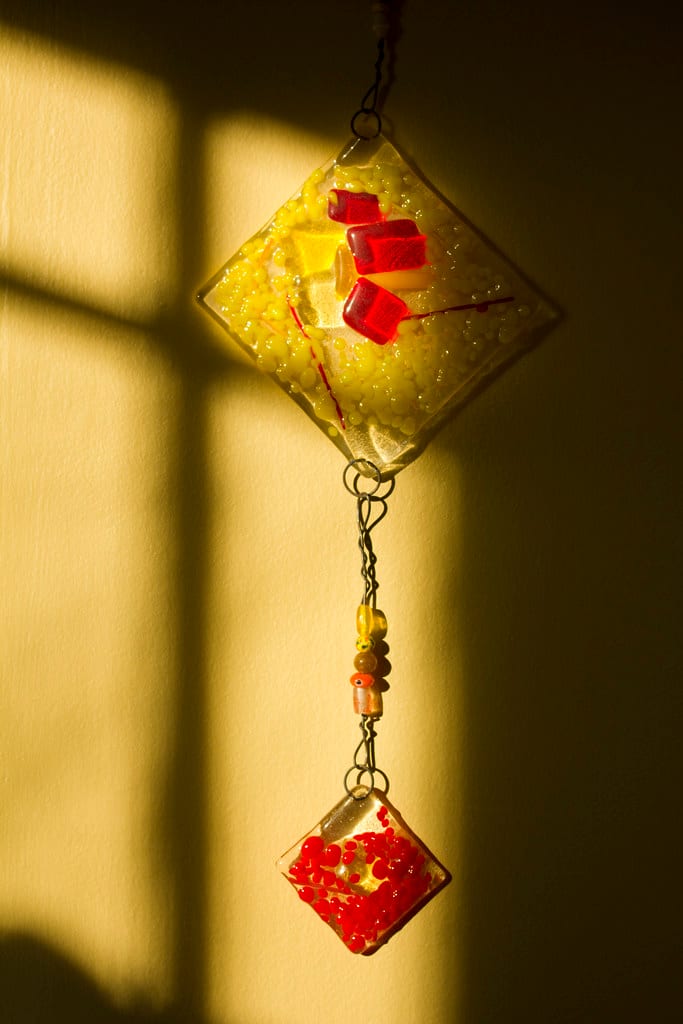
A glass fusing kiln is a specific tool for a specific physics problem: heating flat glass evenly enough to bond layers without cracking them, then cooling slowly enough to prevent thermal shock. It is not a pottery kiln with a different program. The construction differs (ceramic fiber walls, lid-mounted elements, shallow chamber), the temperature range differs (1215-1675°F vs. cone 6’s 2232°F for mid-fire pottery), and the controller matters in a way that pottery hobbyists can sometimes get away without.
The upgrade path from a microwave kiln hits this category: when your project ideas outgrow 2.75 inches, you’re looking at 120V desktop glass kilns starting around $800-900, up through production-scale 240V units at $4,000 and above. Most home studio glass artists land in the $1,000-1,700 range and stay there.
How a glass fusing kiln differs from a pottery kiln
Both are electric resistance kilns. The physics is the same: current flows through elements, elements produce heat, the chamber heats up. The design decisions diverge from there.
Element placement. A pottery kiln puts elements on the side walls of a tall chamber designed to heat a stacked load evenly in three dimensions. A glass kiln puts elements in the lid (and often the sides) of a shallow chamber to heat a flat surface evenly from above. Flat glass fusing work sitting on a shelf needs the heat coming from above to fuse evenly. A side-only element kiln produces hot spots at the edges and cooler zones in the center on flat work.
Chamber shape. A pottery kiln is tall to accommodate shelves of three-dimensional pieces. A glass kiln is shallow (typically 4-7 inches deep) because glass fusing work is flat, and shallow chambers heat and cool faster and more evenly.
Wall construction. Most glass kilns use ceramic fiber (soft, lightweight, rapid thermal response). Many pottery kilns use heavy firebrick (dense, slow to heat, slow to cool, holds heat well for bisque and glaze firing). The ceramic fiber in a glass kiln is part of why it can anneal (slow-cool) on precise programmable curves: the walls don’t retain excess heat that fights the programmed cool-down.
Temperature ceiling. Glass fusing tops out around 1675°F for glass casting. Most fusing work happens between 1200 and 1500°F. Pottery kilns are designed for cone 10 at 2345°F and don’t get meaningful use out of the range their element systems are designed to handle if you’re only firing to cone 015 (1479°F).
So can you get away with using a pottery kiln you already own for glass fusing? Technically, yes. Just expect inconsistent results. Side-wall elements built to heat a stacked three-dimensional load create uneven heat across a flat glass surface: hot edges, a cooler center. For an occasional test tile or a one-off experiment, a pottery kiln is fine. For regular production of fused panels, pendants, and slumped bowls, the lid-fired glass kiln earns its keep. That’s the whole reason the category exists as a separate tool.
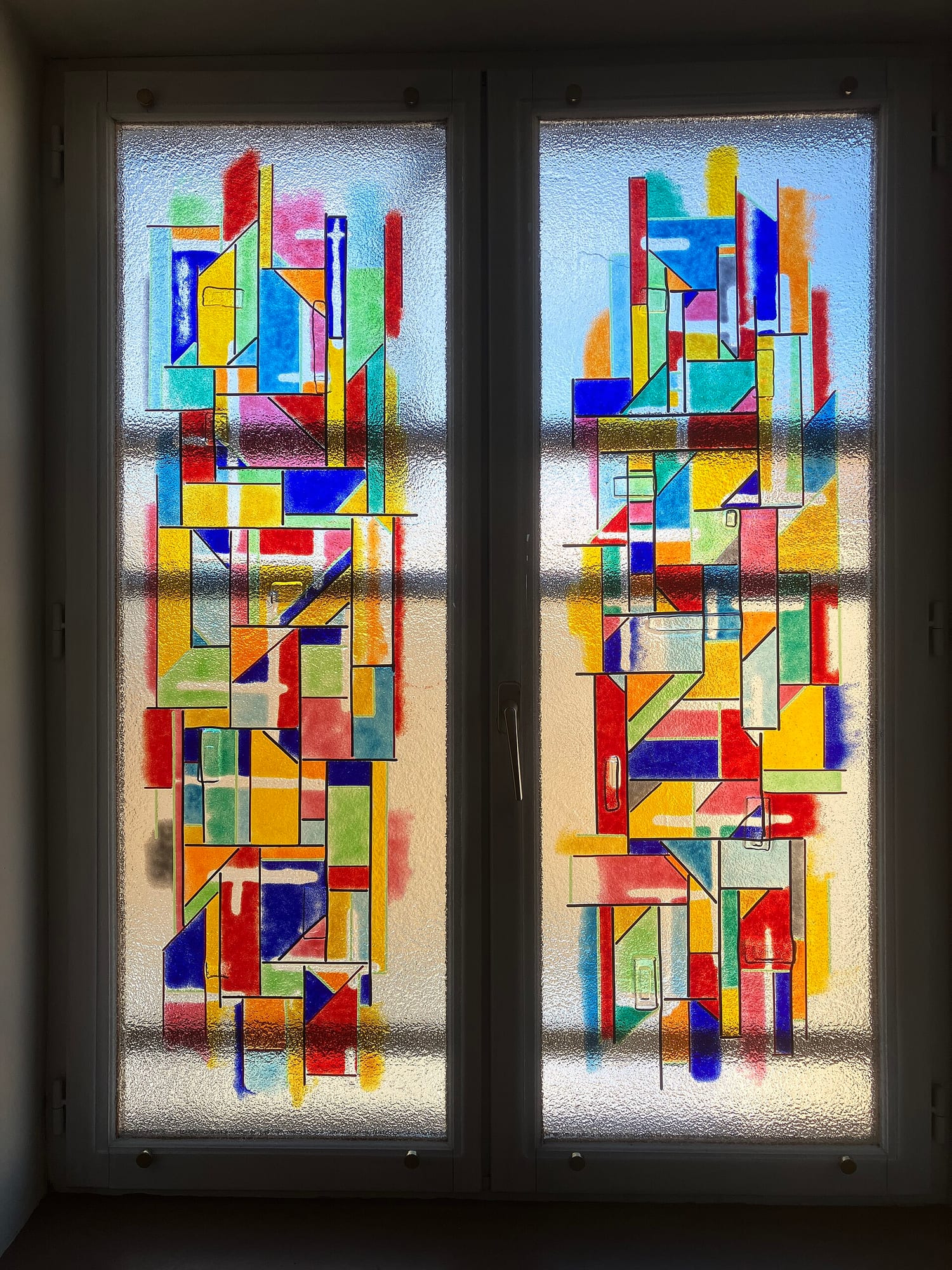
The temperature programs you actually use
Glass fusing is programmable work. You set a schedule of temperature ramps, hold times, and cool-down rates, and the kiln executes it without supervision. Understanding what those schedules are doing is what lets you choose the right controller for your work.
| Technique | Temperature range | What happens |
|---|---|---|
| Slumping | 1215-1249°F | Flat fused piece softens over a mold into a bowl or dish shape |
| Tack fuse | 1350-1369°F | Glass pieces bond; individual shapes and some texture remain |
| Contour/medium fuse | 1400-1450°F | Edges round, layers start to merge, moderate surface texture |
| Full fuse | 1450-1479°F | Layers fully melt into one smooth surface |
| Glass casting | 1550-1675°F | Molten glass fills a mold; kiln wash on mold required |
Temperature ranges from ArtGlassSupplies.com buyer’s guide, verified June 2026. Actual temperatures vary by glass type, thickness, and specific kiln characteristics. Always test with your kiln and your specific glass before committing to a large project.
Tack fuse, full fuse, slumping, and casting are stops along one temperature curve, not separate machines. The kiln stays the same; only the program changes.
The critical design decision this table reveals: all glass fusing techniques happen below 1700°F, and slumping happens as low as 1215°F. A kiln that goes to 2350°F (the Paragon Caldera, which is multi-purpose) is technically capable but overshoots the range you’d ever use for glass work. The relevant spec is temperature precision and programming flexibility, not maximum temperature.
Annealing is a controlled slow cool through the glass’s strain point (around 900-1000°F for most fusing glass) that relieves internal stress. Miss the anneal or cool too fast, and a piece that looks fine in the kiln will crack days later. Every digital programmable glass kiln handles annealing with the right program. This is the thing that separates a dedicated glass kiln from a microwave kiln: the microwave kiln cannot anneal.
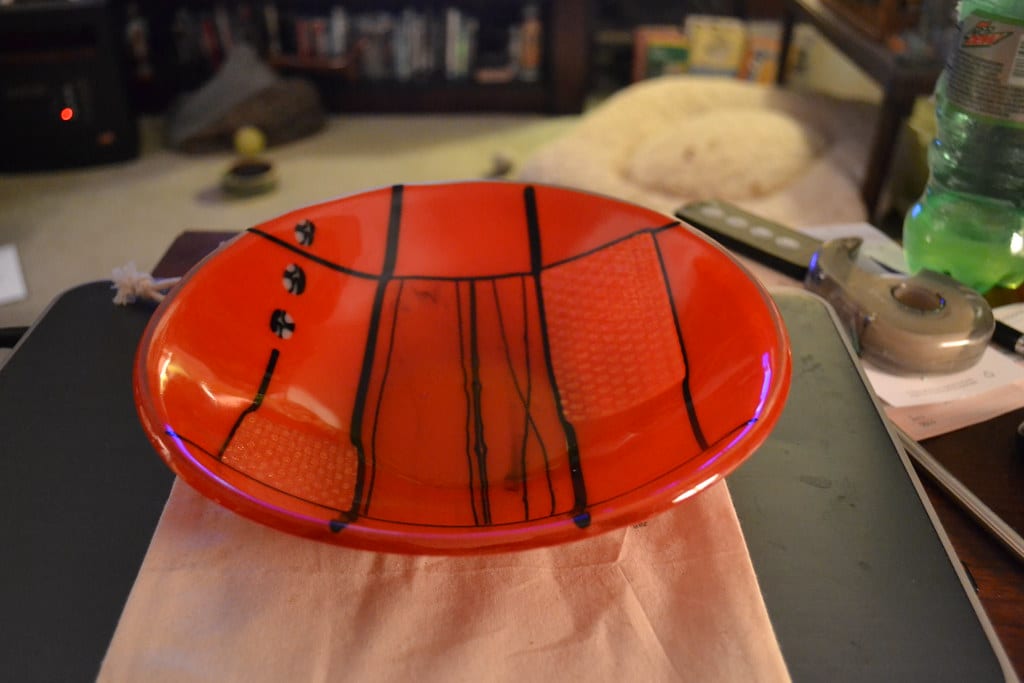
What the controller needs to do
A digital programmable controller is not optional for glass fusing. Full stop. A kiln with a manual switch and a single-set-point dial can’t execute a ramp-and-hold firing schedule, which means it can’t reliably tack-fuse without guessing, can’t slump on a precise curve, and can’t anneal.
What to look for in a controller:
- Ramp-and-hold programming: set ramp rate (°F per hour), target temperature, and hold time for each segment
- At least 6-8 segments (most schedules need 3-5; more gives flexibility)
- Factory-saved glass programs (most controllers include “fuse,” “slump,” “anneal” presets as starting points)
- Real-time adjustment: ability to change hold times or target temps mid-firing without stopping the program
Controllers to know by name:
The Skutt GlassMaster LT (on the FireBox 14) and the Skutt Touchscreen Mini are among the most intuitive. The Evenheat Icon Basic and Icon Advanced are similarly capable. The Paragon Sentry Xpress is the standard on Paragon’s glass and multipurpose kilns.
Avoid: single-set-point “on/off” controllers, manual switches, pyrometer-only setups without programming. These appear on lower-cost kilns and are appropriate only for annealing lampwork beads on a fixed slow-cool, not for controlled fusing schedules.
Size categories
8-inch class ($800-1,100, 120V): Evenheat Studio Pro STP ($904, 8x8x4.5”), Olympic HB86E ($824, 8x8x6.5”), Jen-Ken AF3P ($860, 11x9”). These are starter models. Good for jewelry, pendants, coasters, test pieces, metal clay, and enamel work. The limiting factor arrives fast: you can’t fire a 12-inch plate, you can’t slump a standard mold, and you fire small batches. Most glass artists find themselves outgrowing 8-inch kilns within a year of regular work.
14-inch class ($1,400-1,700, 120V): Evenheat Studio Pro 14 ($1,496, 14.5x14.5x6.5”), Skutt FireBox 14 ($1,678, 15x15x6.5”), Jen-Ken AFG (various configurations around $1,400-1,600). This is the home studio standard. A 14-inch kiln fires a 12-inch plate with margin, handles standard slumping molds, accommodates multiple pendants per firing batch, and still runs on a standard 120V household circuit at 15 amps. The Skutt comes with the GlassMaster LT controller; the Evenheat with the Icon Basic or Advanced. Both are solid controllers.
Larger class ($1,500-2,500+, often 240V): Evenheat Studio Pro 17 (the largest standard 120V model, at 120V/15A), and everything above it typically moving to 240V. The Jen-Ken AFG 18-E ($1,436, 240V 27A) and larger models give firing chambers for panels, larger production batches, and multi-shelf setups. At 240V you’re committing to a dedicated circuit and electrician time.
Clamshell vs. top-loader
Clamshell design: the entire firing chamber and lid lift on a hinge, revealing the full shelf at countertop height. You can see the whole shelf without leaning over, loading and unloading is ergonomic, and advanced kiln-opening techniques (watching a fuse mid-fire, glass raking, kiln combing) are practical.
Top-load design: lid hinges up, you load from above. More space-efficient on a small bench, and kilns like the Skutt FireBox and Evenheat Studio Pro are top-loaders that work perfectly well. The ergonomic argument for clamshell is real but not critical for most home studio work. Either configuration fires identical glass when the temperature programs match; the choice is about workflow, not fired results.
The Jen-Ken AF3P is notable for adding an optional 4-inch front door, which is genuinely useful for peeking at a fuse in progress without fully opening the kiln and losing temperature.
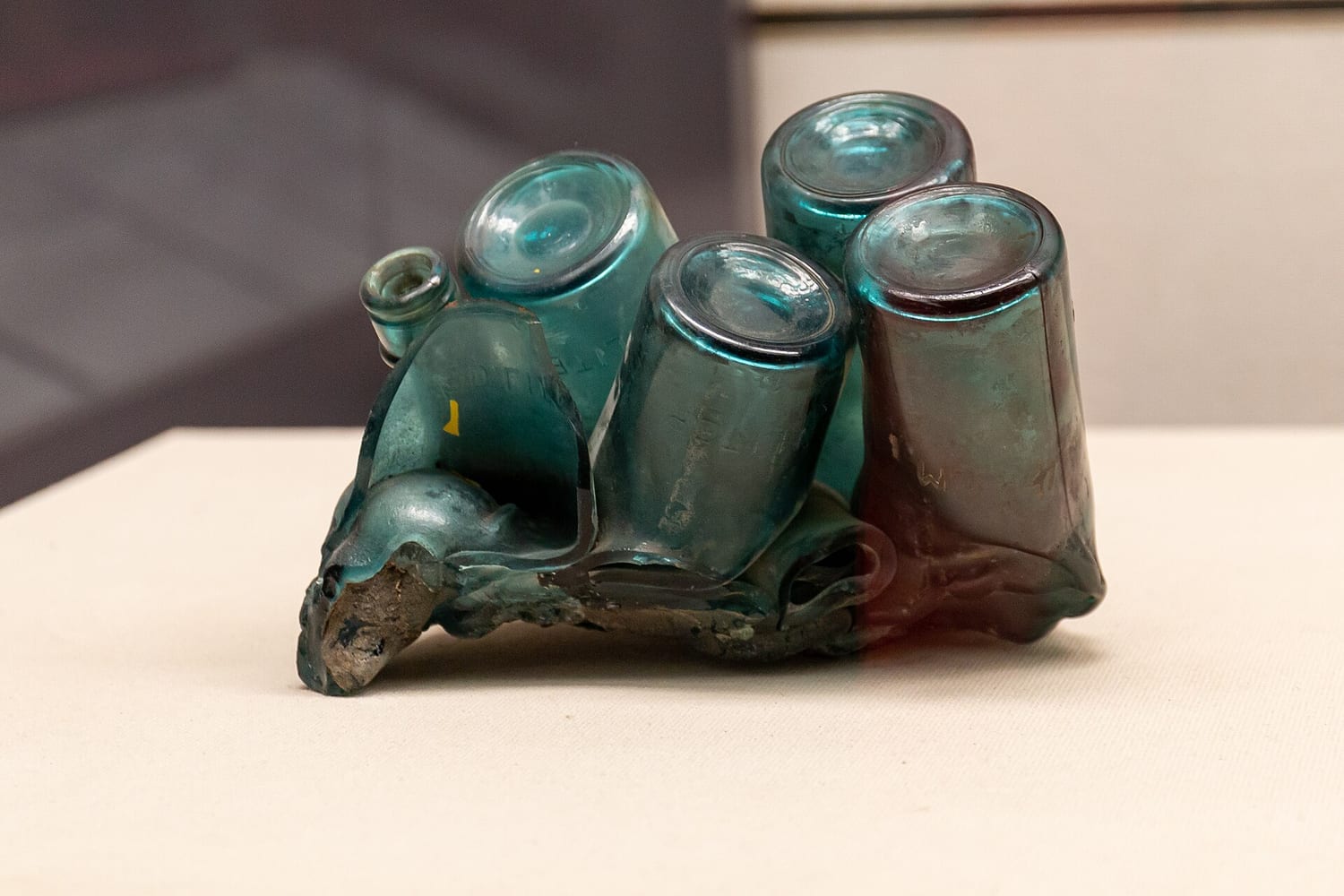
Which models to seriously consider
For a first glass kiln, serious hobbyist budget: The Evenheat Studio Pro 14 ($1,496) and the Skutt FireBox 14 ($1,678) are the two names that come up most consistently in glass fusing communities. Both run on standard 120V, both have capable controllers, both hold a 12-inch plate. The Skutt has a 2-year warranty; the Evenheat has a longer reputation in the glass artist community. The $180 price difference is real; if you’re price-sensitive, the Evenheat is the value. The Skutt has a touchscreen controller many people prefer.
For a smaller budget with an upgrade path in mind: Evenheat Studio Pro STP ($904, 8-inch 120V) gets you into dedicated glass fusing work for under $1,000. Know going in that you’ll likely upgrade to a 14-inch model within a year or two if you’re throwing yourself into the craft.
For a multipurpose kiln (glass AND metal clay AND enamels): The Paragon Caldera (standard: 8x8x6.75, $1,620, 120V 20A; Caldera XL: 7.5x5.5x8.75, 120V 20A) fires to 2350°F, which covers every glass fusing temperature range plus metal clay, PMC, and enamel work. The higher temperature ceiling is genuine utility if you work across multiple media. The downside is that 8 inches of fusing surface limits your glass project size.
For a production home studio: The Evenheat Studio Pro 17 is the largest standard glass fusing kiln that still runs on 120V. Above that, you’re making the 240V commitment, which means dedicated circuit, electrician, and a more permanent studio setup. That’s not wrong, but it’s a different conversation.
The electrical question
120V kilns under 15 amps are the standard starting point. They run on the same household circuits as a refrigerator or a washing machine (15- or 20-amp circuits). At 15 amps, the kiln is the only thing on the circuit during a firing: don’t fire while a vacuum cleaner or space heater shares the circuit.
240V kilns require a dedicated circuit at the amperage the kiln draws. The Jen-Ken AFG 18-E (240V, 27A) needs a dedicated 30-amp 240V circuit. That’s electrician work and potentially a panel upgrade depending on how old your home’s electrical infrastructure is. Budget $200-500 for the electrical work. The Skutt KM-1027 review covers the full circuit and breaker planning for anyone setting up a high-draw studio kiln.
The COE rule you cannot skip
COE stands for Coefficient of Expansion. It measures how much glass expands when heated and contracts when cooled. When two glasses with different COE values fuse together, they try to expand and contract at different rates during cooling, which builds internal stress. The result is usually cracking, sometimes immediately, sometimes days or weeks after the kiln.
The standard glass fusing COEs are 90 (Bullseye is the primary brand) and 96 (Spectrum, System 96, now called Oceanside). COE 90 and COE 96 glass are not compatible in the same project. Choose one and use it for everything: base glass, frit, stringers, dichroic glass, powders, billet, and rods.
Window glass, wine bottles, and beach glass all have unknown or non-standard COE values. Use them for textural and decorative elements if you understand they may crack, or in separate experimental projects, never mixed with COE 90 or 96 production glass.
Setting up
The first supplies to buy alongside the kiln:
- Kiln wash (also called shelf primer, kiln primer, or Hotline kiln wash): applies to the shelf surface before every firing to prevent glass bonding to the shelf permanently. Standard practice: wash the shelf before every firing, scrape and reapply if glass adheres.
- Kiln shelf: most kilns include one. Having a second shelf means you can prepare the next firing while the previous one cools.
- Fiber paper: thin ceramic fiber cut to fit under projects. Alternative to kiln wash, especially useful for slumping molds.
- Digital pyrometer with thermocouple: optional if your kiln’s controller has a display, but useful for calibration testing in a new kiln.
- Safety glasses: required for glass cutting, and useful when checking kiln peepholes.
For the glass itself, start with a sampler of COE 90 (or 96) sheet glass and frit from Bullseye or a local glass supplier, plus a few glass cutters and a breaking tool. The technical work of learning glass fusing is largely in the programming and the glass selection. The kiln is just the oven.
When you’re ready to think about a broader studio setup, the Skutt KM-1027 review covers the circuit and breaker requirements for high-draw studio kilns and what that installation actually costs.