Glass 8 min read
Microwave Kiln Guide: Glass Fusing in Your Kitchen
What microwave kilns can and can't fuse, how they work, honest limits on size and temperature, and when to upgrade to a real glass-fusing kiln.
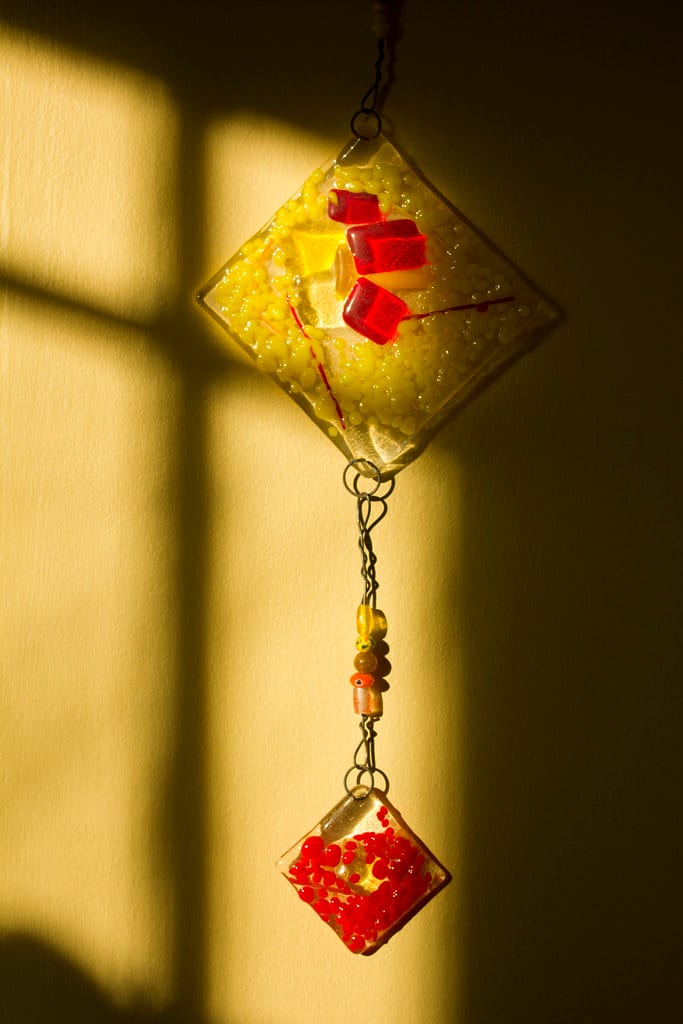
A microwave kiln is a ceramic box roughly the size of a large coffee mug. Put it in your microwave, place small glass pieces on the 2.75-inch fusing platform inside, fire for a few minutes, and the glass fuses. That’s the whole mechanism. The Fuseworks FW849 is the dominant brand on Amazon, has been around long enough to have real owner data, and runs about $30 to $35 for the kiln alone. The honest limits are just as important as the pitch: the working platform is 2.75 inches across, you get no meaningful temperature control, and the kiln wears out after roughly 200 to 300 firings. Those are the facts you need before buying.
The dominant microwave-kiln brand on Amazon and the right tool for testing glass fusing before committing to a real electric kiln, exactly up to a 2.75-inch fusing platform. The kiln alone is the pick for buyers who already have glass and supplies.
Here’s what matters for the glass-fusing path: a microwave kiln is the gateway product. It handles pendants and earrings now. When your ideas outgrow 2.75 inches, the upgrade is a small electric glass fusing kiln, which is a different machine entirely and covered in the glass-fusing kiln guide.
How a microwave kiln actually works
The lid of the kiln contains a metallic composite material specially formulated to absorb microwave energy and convert it to radiant heat. The microwave doesn’t heat the glass directly. It heats the lid, and the lid heats the glass sitting inside. Temperatures inside reach roughly 1500°F (815°C), which is enough to fuse compatible glass but nowhere near the 2300°F a pottery kiln needs to mature stoneware.
The control you have over this process is crude. Start the microwave for a few minutes, stop it, lift the lid carefully with heat-resistant gloves, look at the glass, decide if it’s done. The glass either isn’t fused yet (fire more), is tack-fused with the edges softened and rounded (stop here if you want a 3D result), or is fully fused flat (stop here for a smooth surface). The problem is that each firing is slightly different: the kiln’s heating composite degrades a little each use, your microwave runs at a slightly different wattage than the manufacturer’s test unit, and the glass thickness and quantity changes the heat load. Higher wattage heats faster and runs hotter, so a 1200W microwave needs less time than an 800W one for the same result. Keep notes from your first few firings. You’ll find your specific microwave-and-kiln combination’s sweet spot, and then it becomes reproducible.
One technical note from Glacial Art Glass’s guide that the product pages skip: most microwave kilns sold at different price points come from the same overseas manufacturers. The premium listings mainly add gloves, sample glass, and accessories. The kiln itself is functionally identical across brands (verified June 2026 against Glacial Art Glass’s supplier knowledge base).
The spec box: what you’re buying
| Spec | Fuseworks FW849 |
|---|---|
| Inner fusing platform | 2.75 inches diameter |
| Overall dimensions | 3.25” H × 4.5” D |
| Weight | 1.5 lb |
| Microwave required | 800-1200W, dedicated to craft use only |
| Firing time (typical) | 3-15 minutes depending on project and wattage |
| Cooling time | 45 minutes minimum, undisturbed |
| Expected lifespan | 200-300 firings |
| Compatible materials | COE 90 or COE 96 fusing glass, metal clay, enamels |
| Incompatible materials | Standard window glass, bottles, pottery clay, ceramics |
Specs verified June 2026 against Diamond Tech Crafts manufacturer page. Lifespan figure from Glacial Art Glass’s supplier guide.
That 200 to 300 firing lifespan isn’t arbitrary. The lid is the wear item: small fragments of the heating composite eventually spall off with repeated firing and can land on your work mid-fuse. At two firings a week, that’s roughly two years before you notice it. When firings start producing inconsistent results, or you spot debris on a finished piece, it’s time for a replacement lid or a new kiln.
The Fuseworks FW849 runs about $30-35 for the kiln alone. The starter kit includes the kiln plus COE 90 glass, kiln paper, a glass cutter, hot mitts, earring hardware, and jewelry bails, which is the better buy if you’re starting from nothing. The kit saves you three separate orders and one frustrating “I have a kiln but no glass” moment.
What you can and can’t fuse
What works: small flat pendants and earrings, stacked up to two layers of 1/8 to 1/4-inch glass. Frit and stringers (small glass rods and powder used for decoration) placed on a base piece. Metal clay, which fires in 5-10 minutes and produces rings, charms, and pendants. Small enamel work.
What doesn’t work, and why:
Regular glass (bottles, windows, drinking glasses): these have incompatible COE values, meaning the glass expands and contracts at a different rate than fusing glass during heating and cooling. They crack on the kiln shelf or, worse, after you’ve added settings and bailed them.
Mixing COE 90 and COE 96 glass: same problem. COE 90 (Bullseye is the main brand) and COE 96 (Spectrum, System 96) cannot be mixed in the same piece. Pick one and stick with it across every project. Kiln paper, gloves, and shelf primer work with both; the glass itself is the incompatibility.
Large pieces: the platform is 2.75 inches. That’s about the width of a large olive. A 5-inch project needs a larger microwave kiln (the Fuseworks Craft Kiln, ASIN B07CY5YXBS, has a larger chamber) or a real electric fusing kiln.
Pottery and ceramics: microwave kilns reach around 1500°F. Earthenware needs roughly 1800-2100°F to mature, stoneware needs 2100-2300°F, and cone 10 reduction porcelain sits at 2345°F. A microwave kiln cannot fire pottery clay. It is a glass-and-metal-clay tool.
Slumping: draping flat glass over a mold to create bowls and plates requires sustained temperature with precise programmer control, which a microwave kiln can’t provide.
Safety: the rules that actually matter
Keep all of them. The two non-negotiables are the dedicated microwave and the gloves.
Dedicated microwave. The kiln releases fumes during firing, and fusing glass leaves residue inside the microwave cavity. Running food through a kiln microwave is not safe. A secondhand countertop microwave from a thrift store works fine: 800-1200W, clean interior, no metal-lined cavity. Buy one for $15-30 and retire it from food duty permanently.
Heat-resistant gloves. Leather welding gloves or purpose-built hot-glass mitts. The lid of the kiln glows red after firing. “I’ll use oven mitts” is how you learn why this rule exists.
The rest of the list: a heat-proof surface (brick, ceramic tile, or a metal trivet) to set the kiln on after removal. A well-ventilated room, open window or garage door. Safety glasses when cutting or handling cut glass edges. Kiln wash or fresh kiln paper on the platform before every firing, or the fused glass bonds to the shelf permanently.
One more thing from Fire Mountain Gems’ project guide: don’t open the kiln for 45 minutes after firing ends. Small pieces have less accumulated stress than large ones, so cracking from shock is less common in a microwave kiln than in a full-size kiln, but it does happen. The cooling period is the rule.
Tack fuse vs full fuse
Two results you’ll hear about, and the distinction matters.
Tack fuse: the glass surfaces bond but the pieces retain their separate identities, edges, and some three-dimensional character. If you layer a small piece of red glass on a clear base, a tack fuse leaves the red piece visible as a raised element rather than melting flat. Lower temperature, shorter time, the kiln gets checked earlier.
Full fuse: the layers melt together completely into a single smooth surface. The same red piece disappears into the clear base as a flat inclusion. Higher temperature, longer time, the kiln runs until everything levels.
Which to aim for depends on the project. Jewelry with texture and visual depth usually tack fuses. Smooth, professional-looking pendants usually full-fuse. Because the microwave kiln has no thermostat, you learn to control this through timing and how often you stop to look. More inspection stops = finer control = more likely to nail tack fuse. Fewer stops = hotter = more likely to hit full fuse or accidentally go past it.
One limitation worth naming plainly: annealing cannot happen in a microwave kiln. Annealing is a controlled slow-cool through the glass’s strain point that relieves internal stress. It’s what makes professional glass ware durable. Small microwave-kiln pieces usually survive without it because their mass is too small to hold significant stress, but technically they are not annealed. For jewelry you’re going to set and wear, this is acceptable. For anything heirloom you’d put in a gallery, it’s the argument for upgrading.
When to upgrade
The Fuseworks FW849 will serve you well for one to two years of weekly jewelry-making. The signal to upgrade is when you have consistent project ideas that simply don’t fit on a 2.75-inch platform. Platters, bowls, wall panels, production quantities: those need an electric glass fusing kiln.
Entry-level electric fusing kilns from Skutt and Evenheat start around $500-800 for desktop models. They give you a programmable controller, precise temperature ramps, an annealing schedule, and a chamber large enough to fire multiple pendants at once or a single 6-inch panel. They also fire slumping work, which opens up the entire bowl and plate category. The full breakdown of what to look for and which models fit which budgets lives in the glass-fusing kiln guide.
Desktop glass fusing kilns run on standard 120V power, the same outlet as your microwave, so no dedicated circuit is needed. Full-size 240V kilns are the exception in this category. For a studio setup that adds a pottery kiln alongside, the Skutt KM-1027 review covers the circuit requirements for that class of high-draw kiln.
As an Amazon Associate, Kiln Shed earns from qualifying purchases.
The Fuseworks FW849 costs less than a dinner out. If glass fusing interests you and you want to test the medium before committing to a real kiln, it’s the right tool for the job, exactly up to 2.75 inches. Past that, you know where the upgrade path leads.