Kilns 11 min read
Skutt KM-1027 Review: Owner Data on the Studio Standard
What Skutt KM-1027 owners actually report: verified specs, the 60-amp circuit it needs, element life, and the true cost of every cone-6 firing.
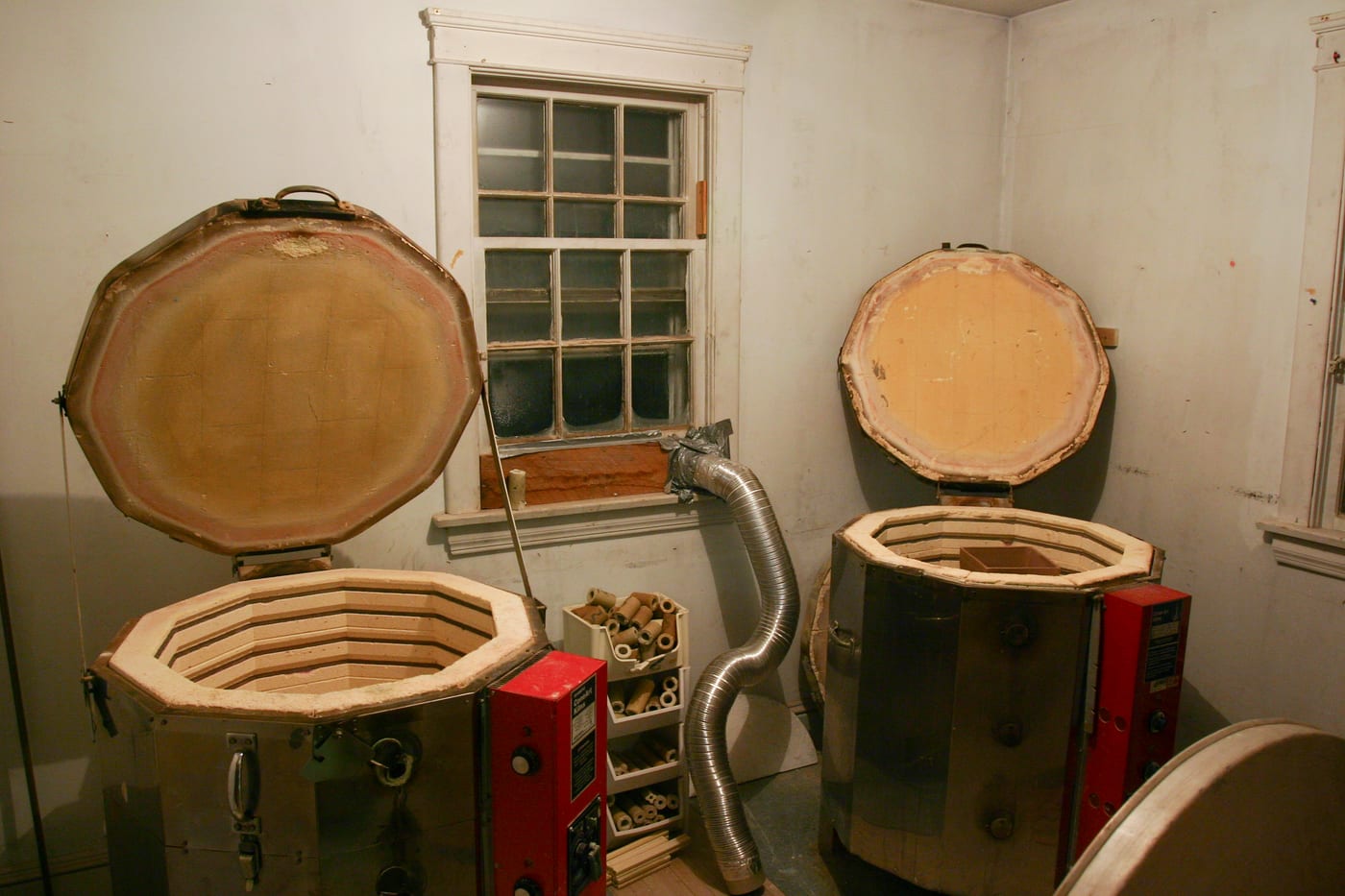
The Skutt KM-1027 is the electric kiln most serious home studios end up buying, and it earns the position: a 10-sided, roughly 7-cubic-foot chamber that fires evenly to cone 10, runs on the KilnMaster controller, and lasts long enough that the resale market for used ones barely exists. The catch is not the kiln. It is the 60-amp, 240-volt circuit it needs before it can turn on, which is the real decision most buyers underestimate. Verified against authorized Skutt dealer spec sheets in June 2026.
Here is the number nobody puts on the product page: at the U.S. average electricity rate, a single cone-6 glaze firing costs about $15.41. That comes straight from the kiln’s own 11.52 kW rating and a kiln-manufacturer firing method, and the full table is below. It is the one figure that tells you what owning this machine actually costs after the purchase price.
Spec and electrical box: what you are buying and what it needs
This is the box to read before anything else. The left column is the kiln; the right column is the circuit your electrician has to build for it.
| Spec | KM-1027 |
|---|---|
| Sides / shape | 10-sided, sectional |
| Interior chamber | ~23 in wide x 27 in deep |
| Capacity | ~7 cu ft (Sheffield lists 6.4 cu ft usable) |
| Max temperature | Cone 10 (2350°F) |
| Controller | KilnMaster, 12-key, 32 ramp/hold segments, 12 stored programs |
| Thermocouple | Encapsulated Type K (Type S upgrade available) |
| Shipping weight | ~290–320 lb |
| Warranty | 2-year limited (elements excluded) |
| Price band (June 2026) | ~$3,500–$4,600 on sale, ~$4,400–$5,250 list, by dealer |
| Electrical (per configuration) | Amps | Watts | Breaker | Copper wire | Receptacle |
|---|---|---|---|---|---|
| 240V single-phase | 48 A | 11,520 W | 60 A | #6 | NEMA 6-50 |
| 208V single-phase | 48 A | 9,980 W | 60 A | #6 | NEMA 6-50 |
| 240V three-phase | 29.3 A | 11,520 W | 40 A | #8 | NEMA 15-50 |
| 208V three-phase | 31.7 A | 11,000 W | 40 A | #8 | NEMA 15-50 |
Specs verified June 2026 against The Ceramic Shop and Krueger Pottery (authorized Skutt dealers) and the Skutt electrical spec sheet mirrored at ArtGlassSupplies. Skutt’s own note: for each additional 50 feet of wire run, step up two gauge numbers (heavier wire is a lower number, so a long run takes #6 to #4). Confirm your run with an electrician.
The kiln itself sells through dealers and direct ceramic-supply programs, not Amazon, because it ships freight and needs a hardwired or 50-amp-plug circuit. Compare current pricing at Soul Ceramics, Blick Art Materials, or Sheffield Pottery before you buy. Prices move with copper and freight, so check current price rather than trusting any single listing.
What circuit does a Skutt KM-1027 need?
A 60-amp, 240-volt, single-phase dedicated circuit. That is the headline, and the word that matters most is “dedicated.” The KM-1027 draws 48 amps continuously when its elements are on, and the National Electrical Code sizes a continuous-load breaker at 125% of the draw, which lands at 60 amps. Nothing else can share that circuit. No lights, no outlets, no second kiln.
The wire is #6 copper for any run up to about 50 feet. Skutt’s spec sheet adds a rule most buyers miss: every additional 50 feet of cable run means going two gauge numbers heavier, so a long basement-to-garage pull might call for #4. That is a real cost, because copper is priced by weight and a 60-foot run of #4 is not cheap. Get the panel-to-kiln distance measured before you price the job.
The receptacle is a NEMA 6-50, the same 50-amp 240-volt configuration a welder uses, mounted to the right of the kiln (facing it) and about 18 inches off the floor with the ground pin up, so the cord hangs without strain. Some installs hardwire the kiln instead of using a plug; both are fine, and an electrician will pick based on your local code.
The 208-volt version exists for a reason worth knowing. Commercial buildings and many apartments deliver 208V three-phase power, not 240V single-phase. At 208V the KM-1027 still pulls 48 amps but makes less heat (9,980 watts instead of 11,520), so it fires a little slower. If you are wiring into a commercial space, confirm your building’s voltage before ordering; a 240V kiln on 208V power will struggle to reach cone 10 with a full load.
What wire gauge and breaker, exactly?
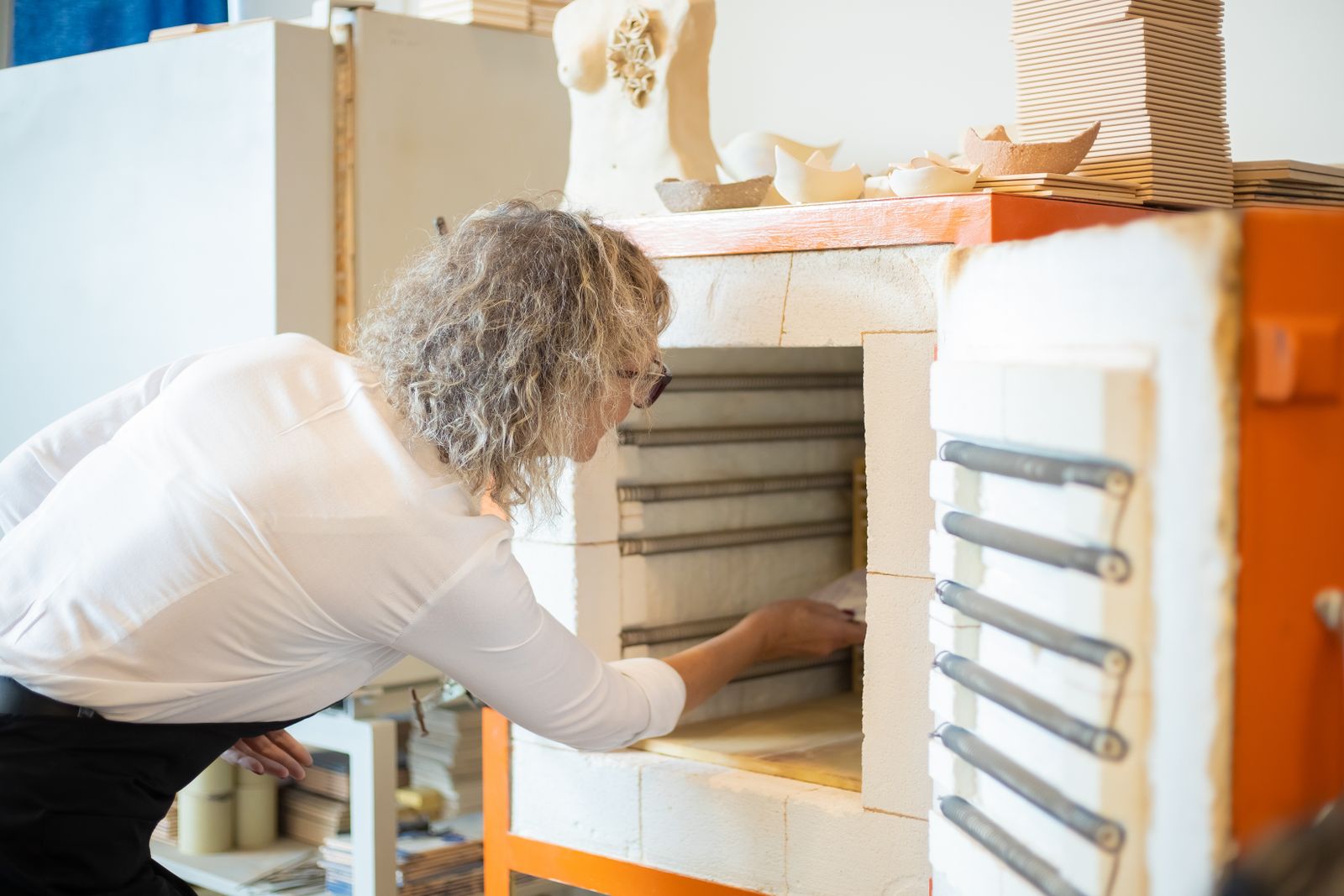
Pulling the electrical detail out so you can hand it to an electrician without paraphrasing it. For the standard 240V single-phase KM-1027: a 60-amp double-pole breaker, #6 copper conductors, and a NEMA 6-50 receptacle or a hardwired connection. That covers the great majority of home installs.
Three-phase changes the math. A 240V three-phase KM-1027 draws only 29.3 amps because the load splits across three legs, so it needs just a 40-amp breaker and #8 wire on a NEMA 15-50. The 208V three-phase version draws 31.7 amps on the same 40-amp, #8 setup. Three-phase power is rare in homes and common in schools and commercial studios, which is exactly the split between the two kinds of KM-1027 buyer.
One more practical note from Skutt’s own installation guidance: the kiln has to live in a room that stays under 100°F. The KilnMaster controller monitors its own board temperature and shuts the firing down if the electronics overheat, which is a feature, not a fault, but it means a closed, unventilated garage in an Arizona July is a bad home for it. Cross-ventilation or a downdraft vent solves it.
Can a KM-1027 run in a garage?
Yes, and a garage is arguably the best room for one. The concrete floor handles the heat and weight, the clearances are easy to keep (Skutt wants air space around the kiln and distance from combustible walls, per the manual), and an exterior wall is right there for venting. The two non-negotiables are the dedicated 60-amp circuit and a way to get the fumes outside.
Venting is not optional for an indoor kiln. Bisque and glaze firings release fluorine, sulfur, and other compounds you do not want to breathe, and a downdraft vent pulls them out before they reach the room. Skutt’s EnviroVent 2 is the matched system: a 140 CFM wall-mounted motor that handles a single kiln up to 24 cubic feet, with 8 feet of 3-inch ducting to run through a wall. We cover the full venting decision in the kiln ventilation guide, and the wider “where can this physically go” question in the kiln placement guide. For the circuit itself, the kiln electrical requirements page has the by-model table.
Owner reports: reliability, element life, and what breaks first
Here is the honest reliability picture, straight from the people who own one: the dealer review pages and the Ceramic Arts Daily Community forums, read in June 2026.
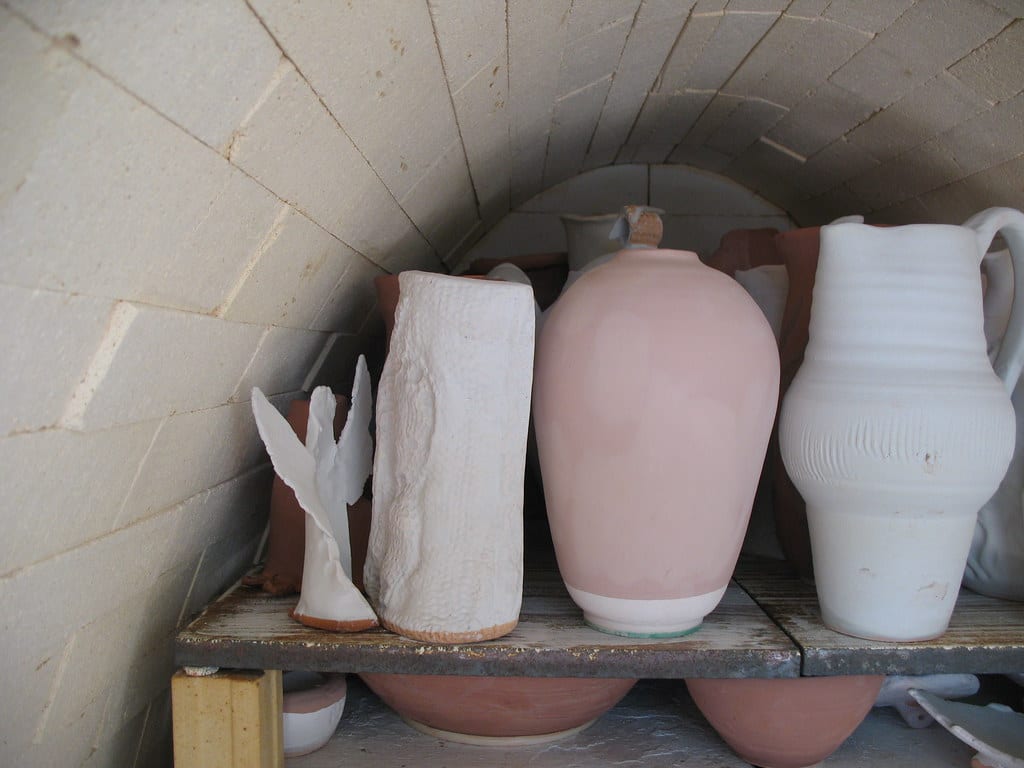
The consensus on the machine is boring in the best way. Owners describe the KM-1027 as evenly firing and long-lived, and the resale market is the tell: these kilns rarely show up used, and when they do they hold value, because people keep them for 15 to 20 years rather than flipping them. The 10-sided shape and the balanced element design (more powerful elements top and bottom) are the two features owners credit for even firings to cone 10 across a full load.
Element life is the most-discussed wear item. Across owner reports, a set of elements firing roughly twice a week tends to last a year to 18 months, which works out to the rough neighborhood of 100 to 150 firings, with the count dropping if you fire hot to cone 10 often (cone 10 is brutal on elements) and rising if you stay at cone 6 or below. The KM-1027’s elements sit in deeper grooves with more total wire than a budget kiln’s, so each element works less hard at a given temperature, which is the engineering reason behind the long life.
The clearest failure signal owners report is firings that run progressively longer than they used to. On the Ceramic Arts Daily thread about a 1027 firing slow with fresh elements, the discussion lands on the usual suspects: aging elements first, then relays, then low supply voltage, since a kiln on a long undersized run or a sagging utility supply will struggle to hit temperature even with new elements. When the controller throws an ERR1, it is usually telling you the kiln could not climb fast enough, which most often means the elements are done. The relays (the switches that cycle the elements on and off) are the second consumable, and a few owners report swapping a relay before they swap elements.
What owners wish they had known: budget for the electrician up front (the install can rival a meaningful fraction of the kiln price), buy the furniture kit of shelves and posts at the same time as the kiln, and keep a spare thermocouple on hand because it is the one part not covered by the 2-year warranty and it will eventually drift. The KilnMaster controller itself draws few complaints; owners find the 12-key, 32-segment programming dated but reliable, and the current-sensing diagnostics genuinely useful for catching a tired element before a load fails.
Cost to fire: the number the product page hides
Nobody publishes what a specific kiln model costs per firing at a real, current electricity rate. So here it is. The math is L&L Hot Kilns’ own: split the firing into equal time segments, apply rising duty cycles (25%, 50%, 75%, then 100% of rated power for a high-fire), sum the kilowatt-hours, and multiply by your electricity rate. For the KM-1027, that means its 11.52 kW rating at the EIA’s U.S. average residential rate of 17.83 cents per kWh (March 2026).
| Firing | Energy used | Cost at U.S. average (17.83¢/kWh) |
|---|---|---|
| Bisque, cone 04 (3-segment, ~9 hr) | 51.8 kWh | $9.24 |
| Glaze, cone 6 (4-segment, ~12 hr) | 86.4 kWh | $15.41 |
| Full bisque + glaze cycle | 138.2 kWh | $24.65 |
Based on the KM-1027’s 11.52 kW (240V) rating and L&L Hot Kilns’ segment duty-cycle method. Rate: EIA Electric Power Monthly Table 5.6.B, U.S. residential average, March 2026 YTD. Your firings will vary with load, element age, and schedule.
Your real cost is the U.S. column scaled to your rate, and the spread is large. The same cone-6 glaze firing that costs $15.41 at the national average costs about $10.06 in North Dakota (11.64¢/kWh) and about $37.15 in Hawaii (43¢/kWh). Per piece, the economics are gentler than the totals suggest: a full bisque-and-glaze cycle on a load of roughly 38 tea bowls works out to about 65 cents of electricity per piece. The kiln is expensive to buy and cheap to run, which is exactly the cost shape a serious hobbyist wants. The full regional breakdown and per-mug math for every model we review lives on the kiln cost-to-fire flagship.
Who should buy something else
The KM-1027 is overkill for some buyers and underkill for none in the home-studio range, so the “buy something else” cases are mostly about size and circuit.
Buy the smaller Skutt KM-1018 if your work is mugs, bowls, and small sculpture, or if your panel cannot spare a 60-amp circuit. The KM-1018 is the same kiln philosophy in 4.6 cubic feet: it draws 39.4 amps and runs on a 50-amp breaker with the same #6 wire and NEMA 6-50, which is an easier and cheaper electrical install. You give up depth and per-firing capacity. If you are torn between the two, the KM-1027 vs KM-1018 comparison is a pure spec-and-fit decision page.
Look at the L&L e23T if element replacement worries you more than anything else. L&L’s structural difference is hard ceramic element holders that support the element coils, which owners and L&L both argue extends element life and makes replacement cleaner. It competes in the same 7-cubic-foot, cone-10 class as the KM-1027, with a different controller (the DynaTrol) and a different bet on longevity. The two are the American studio-kiln heavyweights; the Skutt vs L&L comparison sorts them by buyer type.
Do not buy a KM-1027 if you live in an apartment with only 120-volt outlets and no path to a 240-volt circuit. No amount of wanting it changes the physics: a 48-amp 240V kiln cannot run on a standard wall plug. That buyer wants a small 120V test kiln, which is a different machine and a different article.
The verdict
The Skutt KM-1027 is the right kiln for a home studio that has, or can build, a 60-amp 240-volt circuit and wants one machine to last two decades. It fires evenly to cone 10, costs about $15 of electricity per glaze load at the national average rate, and shows up so rarely on the used market that its reliability is essentially proven by absence. Budget for the electrician as a real line item, buy the furniture kit and a spare thermocouple with the kiln, and the only recurring decision left is when to swap a tired set of elements. For most people building a serious home studio, this is the kiln, and the circuit is the project.