kiln-guides 13 min read
Kiln Parts Guide: What Fails First and What It Costs
Every replaceable part in an electric kiln with 2026 manufacturer list prices, expected service life, and whether an owner can fit it or needs a technician.
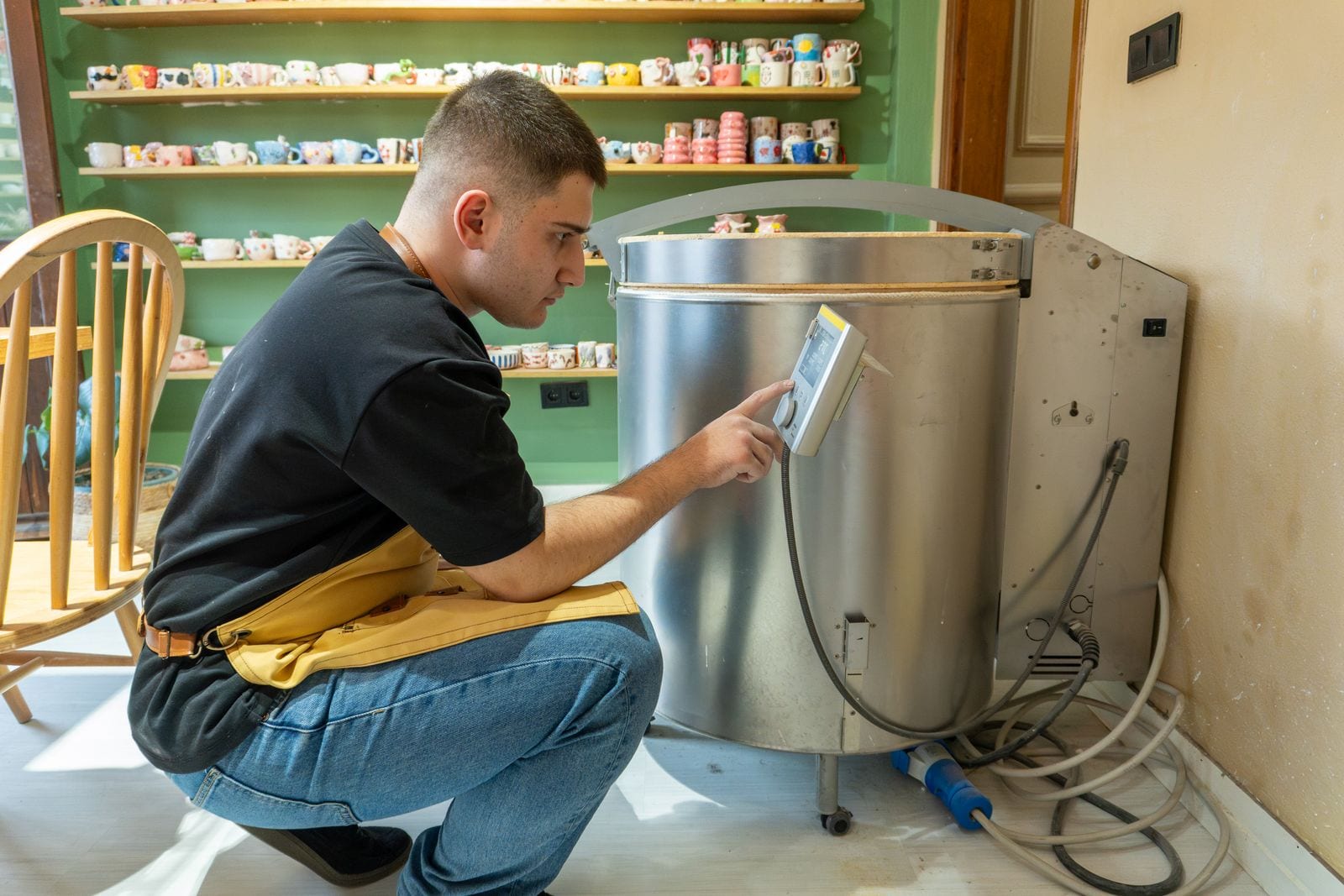
Four parts in an electric kiln wear out: elements, thermocouple, relays and brick. Elements go first, typically 100 to 200 firings at cone 6, at $63 to $74 each on Skutt’s 2026 list. A type K thermocouple is $45 and should be changed with the elements. Relays run about 200,000 cycles. Everything else lasts the life of the kiln.
Below is every part in the machine, the manufacturer’s own current list price, what it actually costs per firing, and whether it is a job for the owner or for a technician. All prices are Skutt’s 2026 parts list, effective 10 January 2026, read on 1 August 2026.
Which kiln parts fail first?
In order of how often they need replacing, not how expensive they are.
- Elements. The only part designed to be consumed. Every firing takes the coil through a full thermal cycle and the alloy pays for it.
- Thermocouple. Type K drifts rather than dies. L&L’s guidance is that it “lasts about the same as kiln elements so it is recommended to change thermocouples when you change elements.”
- Relays. Mechanical parts that make and break the element circuit thousands of times per firing. L&L’s figure is roughly 200,000 cycles, about 18 months of typical use.
- Brick. Not a wear item in the same sense, but chipped, gouged and glaze-contaminated over years, and specifically damaged where an element groove breaks open.
- Wiring, terminals and the power cord. Slow degradation from heat cycling, checked rather than scheduled.
- Lid hardware. Hinge leaves, struts and braces, which loosen and bend from a decade of lifting.
Everything else in the kiln, the case, the bands, the stand and the control box itself, is expected to outlast several rounds of the above.
What does each part cost?
Skutt’s list prices for the three kilns most home studios own. Element quantities are the numbers Skutt publishes as installed per kiln at 240 volts, single phase.
| Part | Skutt part # | KM-818 | KM-1018 | KM-1027 |
|---|---|---|---|---|
| Element, each (standard) | 1540/1541, 0176/0177, 0171/0172 | $63.00 | $74.00 | $74.00 |
| Elements installed in the kiln | 4 | 4 | 6 | |
| Full standard element set | $252 | $296 | $444 | |
| Element, each (APM alloy) | 2700/2701, 2725/2726, 1656/1657 | $150.00 | $185.00 | $185.00 |
| Full APM element set | $600 | $740 | $1,110 | |
| Type K thermocouple, with block and wire | 1506 | $45.00 | $45.00 | $45.00 |
| Type K thermocouple, element only | 1515 | $24.00 | $24.00 | $24.00 |
| Type S thermocouple, with tube and block | 1581 | $325.00 | $325.00 | $325.00 |
| 25-amp relay, black case (newer KM) | 2139C01094 | $43.00 | $43.00 | $43.00 |
| 25-amp relay, clear case (older KM) | 1517 | $52.00 | $52.00 | $52.00 |
| Touchpad with circuit board | 1507 | $420.00 | $420.00 | $420.00 |
| Complete KilnMaster control box | 1522 / 1520 | $835.00 | $835.00 | $1,025.00 |
| Transformer | 1518 | $49.00 | $49.00 | $49.00 |
| Control harness wire set | 2564 / 2560 | $44.00 | $44.00 | $53.00 |
| Element feeder wire set | 1585 / 1584 / 1583 | $49.00 | $49.00 | $67.00 |
| Power cord | 0704 / 0703 | $90.00 | $90.00 | $140.00 |
| Plug | 0879E01219 | $85.00 | $85.00 | $85.00 |
| Straight brick, each | 0262 / 0162 | $17.75 | $17.75 | $17.75 |
| Peep brick, each | 0264 / 0164 | $18.25 | $18.25 | $18.25 |
| Lid, brick | 0260 / 0160 | $255.00 | $380.00 | $380.00 |
| Floor slab | 0261 / 0161 | $245.00 | $365.00 | $365.00 |
| Lid brace package | 0320 / 0323 | $36.00 | $70.00 | $70.00 |
| Lid hinge leaf | 0146C03092 | $9.50 | $9.50 | $9.50 |
| Body hinge leaf | 0147C03092 | $12.00 | $12.00 | $12.00 |
| Hinge strut | 0966E05092 / 2319E05092 | $13.00 | $13.00 | $13.00 |
| Body band | 0257 / 0157 | $80.00 | $92.00 | $92.00 |
| Lid lifter kit | 2398 | not applicable | $560.00 | $560.00 |
| Kiln stand | 0270 / 0170 | $116.00 | $122.00 | $122.00 |
| Element pins, pack of 12 | 1018 | $6.00 | $6.00 | $6.00 |
| Element connectors, crimp-on, pack of 6 | 0074 | $22.00 | $22.00 | $22.00 |
| Kiln patch, pint | 0291 | $13.00 | $13.00 | $13.00 |
| Kiln wash, 5 lb | 0284 | $25.00 | $25.00 | $25.00 |
Skutt 2026 ceramic kiln parts price list, prices effective 10 January 2026, retrieved 1 August 2026. Part numbers differ by kiln size, voltage and phase; the numbers above are the 240-volt single-phase parts. Dealer pricing and shipping vary.
Order every electrical part by model, voltage and phase together. Skutt lists separate part numbers for 240-volt and 208-volt elements in the same kiln, and the wrong voltage is not a minor mismatch. Their own wiring guidance puts a 208-volt kiln on a 240-volt supply at a 15 percent overage, enough to “burn out the elements and damage the relays and even the computer controller.”
How long do kiln elements last, and why do they wear out?
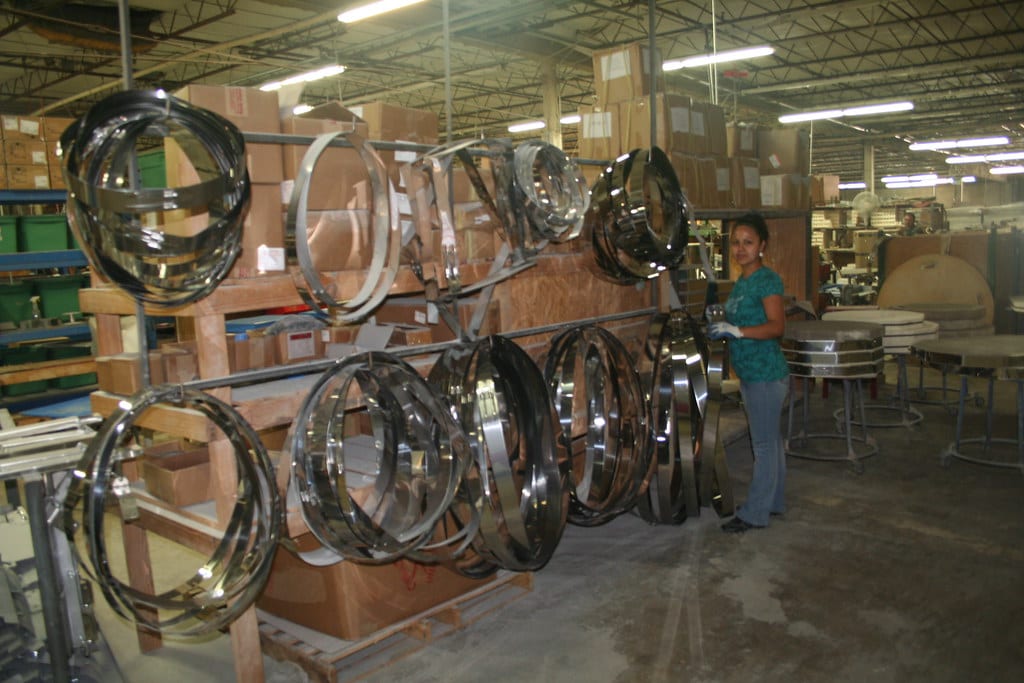
Elements are coiled Kanthal A-1, an iron-aluminium-chrome alloy that L&L describes as resisting temperatures to roughly 2400°F. It survives by growing a tough alumina oxide coating on the outside of the wire. Every weakness of the element follows from that: the alloy “becomes very brittle after firing,” the wire grows with use, resistance climbs with age, and anything that damages the oxide coating can ruin the element outright.
Three practical consequences.
Temperature dominates everything. L&L states the relationship directly: element life “goes down logarithmically with element temperature,” so an element run at 2100°F may last twice as long as one at 2200°F and four times as long as one at 2300°F. A studio that fires cone 6 and stays there is on a completely different replacement schedule from one that fires cone 10 with long holds. Firing to the lowest cone your clay and glaze actually need is the cheapest maintenance available.
The coil runs hotter than the kiln. L&L puts the differential at 50°F to 150°F above chamber temperature, and dense loads widen it because the elements work harder to push heat into the ware. This is also why they tell owners never to load ware closer than 13 mm to an element. Shelves and pots packed against the wall reradiate heat back at the coil and cook it.
Contamination kills elements outright. The named offenders are reducing atmospheres, carbon compounds, glazes, lead oxides, halogens, fluorides and silica compounds, and that last category includes kiln wash. Wash goes on shelf tops only, never on the sides or undersides, and never on the kiln floor where it can migrate.
Expect 100 to 200 firings at cone 6 and 50 to 150 at cone 10. Both ranges are wide because both are dominated by how close to the ceiling you fire and how long you hold there. The full replacement procedure, including the Skutt groove-in-brick system and L&L’s ceramic holders, is in kiln element replacement.
Are APM elements worth the money?
Skutt’s footnote is the honest version: “APM Elements are engineered to last longer in applications with high temperatures and long hold times.” That is a conditional, and the arithmetic makes the condition matter.
| Kiln | Standard set | APM set | APM premium | Break-even life multiple |
|---|---|---|---|---|
| KM-818 | $252 | $600 | $348 | 2.4x |
| KM-1018 | $296 | $740 | $444 | 2.5x |
| KM-1027 | $444 | $1,110 | $666 | 2.5x |
Computed from Skutt’s 2026 parts list. Break-even multiple is APM set price divided by standard set price: the number of times longer an APM set must last to cost the same per firing.
An APM set has to last two and a half times as long to break even. Buying the kiln new, Skutt prices the APM element upgrade at $845 on a KM-1027, $575 on a KM-1018 and $495 on a KM-818, which is cheaper than swapping later.
The case for APM is strongest exactly where Skutt says it is: cone 10 work, long holds, crystalline glaze schedules that soak for hours near peak. The case is weakest for a cone 6 studio firing 20 to 30 times a year, where standard elements already deliver five or more years and the $666 premium buys time you were not going to run out of anyway. Fire cone 6 with no long holds and buy standard. Fire cone 10 with two-hour soaks and the APM math turns.
When should a thermocouple be replaced?
Thermocouples do not usually fail. They lie, slowly.
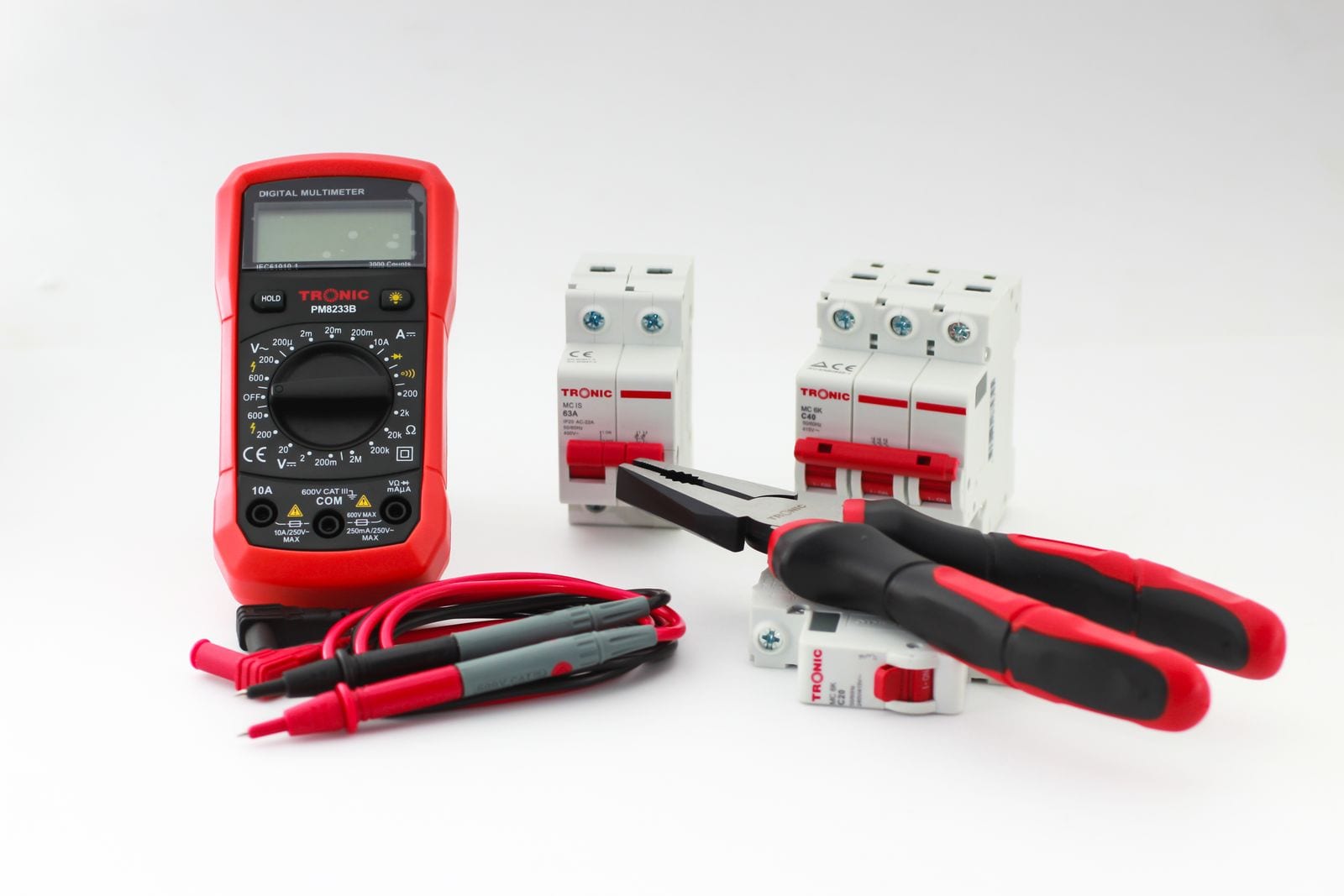
A type K thermocouple drifts with age, reading further and further from the real chamber temperature. L&L’s calibration guidance is to check accuracy with witness cones and replace the thermocouple once it is no longer reasonably accurate, and their headline recommendation is to change type K thermocouples at the same time as the elements, because the two wear at similar rates. Type S thermocouples do not drift; once a kiln with type S is calibrated, it stays calibrated.
The prices explain why almost every home studio runs type K. A type K with block and wire is $45, and the bare element on its own is $24. A type S with protection tube and block is $325, and buying the type S upgrade on a new Skutt kiln is $380 per thermocouple. On a 1-zone kiln that is a straightforward comparison. On a 3-zone kiln it triples.
The tell that a thermocouple has drifted is a firing that the controller reports as perfect while the cones say otherwise. If your cone 6 comes out at cone 5 with a controller insisting it reached temperature, suspect the thermocouple before you suspect the elements, and confirm with a witness cone rather than by guessing.
How long do kiln relays last?
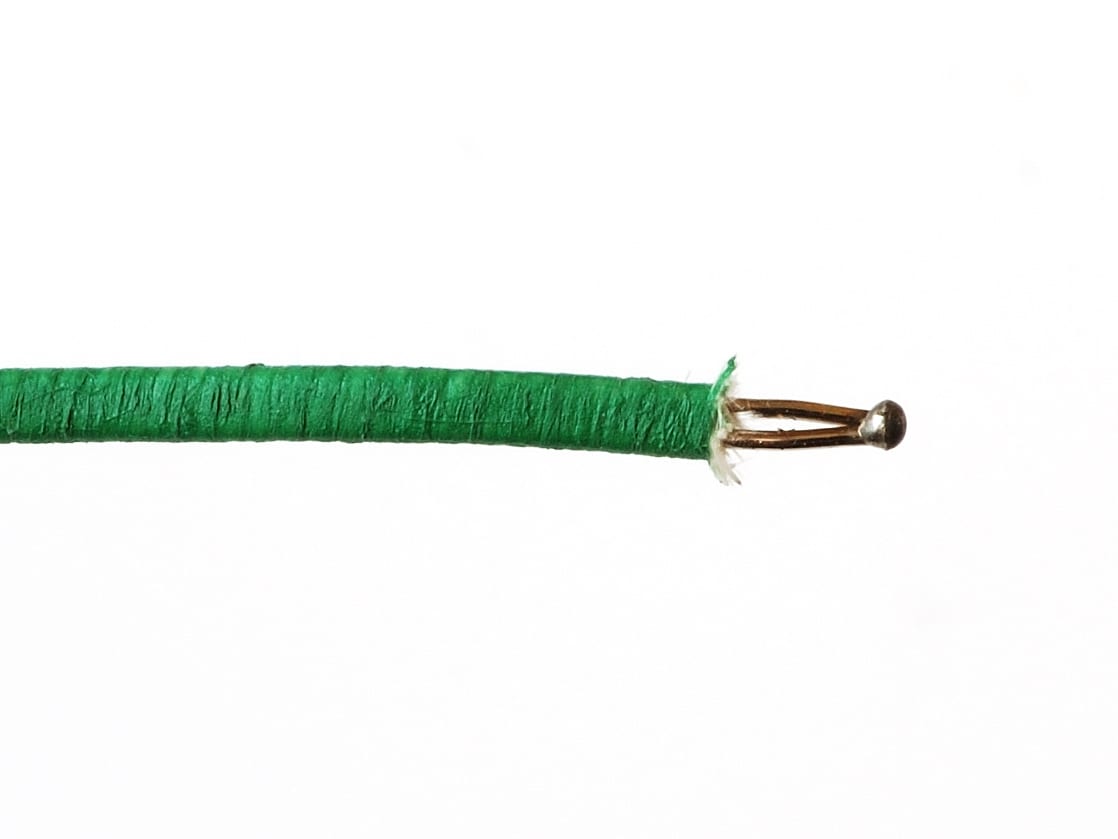
L&L publishes the clearest figure in the industry: relays “generally last around 200,000 cycles on average (roughly 18+ months depending on usage, firing temperature, and firing profile).” Their worked example takes a 25-second cycle time and 1,152 cycles per firing to arrive at roughly 173 firings before replacement. They also say plainly that relays “can fail long before or long after without any explanation.”
That last sentence is the useful one. A relay is not a part you inspect, it is a part you replace on suspicion. The symptoms are a kiln that climbs erratically, one section that stays visibly cooler than the others, an error on the controller, or the absence of the click you have heard on every previous firing.
Skutt’s 25-amp relay is $43 for the black-case version fitted to newer or upgraded KilnMaster kilns and $52 for the clear-case version in older ones. The count varies by kiln size and phase, so check the parts diagram for your exact model rather than assuming. At those prices, replacing the full set when one fails is often the right call: the parts are cheap, the labour is identical, and a relay that survived alongside the one that just failed is on the same clock.
What breaks in the brick, and can it be repaired?
Brick damage sorts into three grades.
Cosmetic. Chips at the edges, dents from a shelf, old glaze runs on the floor. Ignore these. A pint of kiln patch is $13 and handles the ones that annoy you.
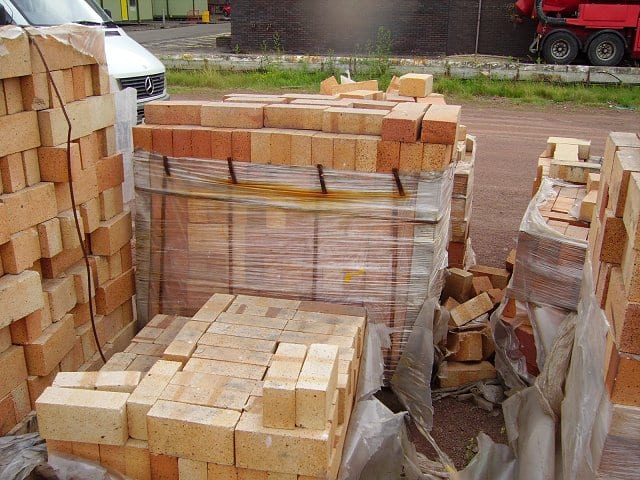
Functional. A broken element groove is the one that matters. L&L is direct about the stakes: if an element droops from a broken groove, “you may have lost that element,” and pinning it back with alloy pins is not an ideal fix because the pins loosen over time as they expand at a different rate to the brick. Individual bricks are replaceable and cheap at $17.75 to $18.25 each, so a single failed groove is a genuine repair rather than a write-off.
Structural. A crack through a wall, or a floor slab broken across. Now you are into the big pieces: a 10-sided 2.5-inch lid is $380 and the slab is $365, and on the 3-inch brick version of the same kiln those rise to $430 and $415. Two of those together exceed the value of many used kilns.
Skutt sells brick by type and position, which is worth knowing before you order: straight, peep, terminal, thermocouple and KS pattern bricks all carry separate part numbers even though they cost within fifty cents of each other. Order by position, not by count.
What can an owner replace, and what needs a technician?
The line is not about difficulty so much as about what happens when you get it wrong.
Owner-replaceable with basic tools and the manual: elements, thermocouple, relays, peep plugs, lid hinge leaves and struts, lid brace, section latches and handles, individual bricks, kiln wash and patch. All of these are documented replacement procedures with published part numbers, and all are done with the kiln unplugged and the breaker off.
Owner-replaceable with more care: the touchpad and circuit board at $420, harness and feeder wire sets, and the terminal strip. These involve the control box wiring, and photographing every connection before disturbing it is the difference between a forty-minute job and a bad evening.
Call a technician: the power cord and plug if there is any sign of heat damage at the terminal block, any repair where you cannot identify what failed, and anything at all if the kiln is still under warranty. Some manufacturers void coverage on a self-serviced kiln, so confirm the warranty terms before opening a kiln that still has coverage on it.
Not a repair at all: a kiln whose brick has failed structurally, or a discontinued controller with no replacement box available. A complete KilnMaster box is $835 for a KM-818 or KM-1018 and $1,025 for a KM-1027, which is the ceiling on what a controller problem can cost while the part still exists.
What does maintenance actually cost per firing?
Here is the figure nobody publishes. Take the element set, spread it across the low and high ends of the expected cone 6 life, and set it beside the electricity cost this site computes for the same kilns.
| Kiln | Standard element set | Per firing at 200 firings | Per firing at 100 firings | Electricity per cone 6 glaze firing | Elements as a share of electricity |
|---|---|---|---|---|---|
| KM-818 | $252 | $1.26 | $2.52 | $8.91 | 14% to 28% |
| KM-1018 | $296 | $1.48 | $2.96 | $12.65 | 12% to 23% |
| KM-1027 | $444 | $2.22 | $4.44 | $15.41 | 14% to 29% |
Element set prices from Skutt’s 2026 parts list. Firing counts are the 100-to-200 range for cone 6 use. Electricity figures computed from each kiln’s rated wattage using the L&L segment duty-cycle method at the EIA US average residential rate of $0.1783 per kWh. All amounts in US dollars.
Elements add something like 12 to 29 percent on top of what the kiln costs to run in electricity. Add a $45 thermocouple every time you change elements and a $43 relay every 173 firings or so, and the whole consumable picture for a KM-1027 lands between $2.75 and $5.00 per firing against $15.41 of electricity.
That is the number to quote when someone says a kiln is expensive to own. The electricity is the bigger line, the parts are real but modest, and the machine underneath both is designed to be rebuilt indefinitely. For the electricity side in full, see kiln cost to fire.
Where to buy kiln parts
Buy from the manufacturer or an authorised dealer, and give them the model, serial number, voltage and phase. Independent dealers price close to list: Ceramic Superstore lists the KM-1027 top and bottom element, part 0171, at $74.00, which is Skutt’s own list price to the cent, and The Potter’s Shop sells Skutt replacement elements at $63.00 each with the porcelain insulators, connectors and pins in the package, with model, voltage, phase and element position all selected at order time.
Resist the temptation to buy generic elements from a marketplace listing. L&L’s warning is specific and worth taking seriously: cheap replacement elements from outside vendors “may not have the proper design and may fail sooner,” several lower grades of iron-aluminium-chrome alloy exist, and there is no way for a buyer to tell which grade arrived. Element design depends on watt density, stretch ratio and the ratio of wire gauge to coil diameter, none of which is printed on a listing. A $40 element that fails in sixty firings costs more than a $74 element that runs two hundred.
The accessories below are the genuine Amazon items: the test gear and consumables, not the kiln-specific parts. As an Amazon Associate we earn from qualifying purchases.
- Klein Tools MM420 digital multimeter for the element resistance check L&L schedules every 20 firings.
- Self-supporting cone 6 witness cones and Orton junior cone 6 cones for catching thermocouple drift before it ruins a glaze load.
- Kiln wash for shelf tops, which is element maintenance as much as shelf maintenance.
- Kiln shelves and posts when the originals warp, since Skutt’s own furniture kit for a KM-1027 lists at $775.
For the maintenance schedule that keeps these parts on their expected life, see kiln element replacement and kiln firing schedules. For how the controller drives the relays and reads the thermocouple, see the kiln controller guide. For the electrical specification each part has to match, see kiln electrical requirements. And if you are pricing a secondhand machine against this parts list, the arithmetic is in the used kiln buying guide.