kiln-guides 5 min read
Kiln Electrical Requirements: Breaker, Wire, Receptacle
Verified breaker size, wire gauge, and receptacle type for Skutt, L&L, and Paragon kilns, from manufacturer spec sheets, with the NEC continuous-load rule.

Every 240-volt kiln requires a dedicated circuit sized to the manufacturer’s electrical specification. This page provides the verified electrical requirements for each kiln reviewed on this site, drawn from manufacturer spec sheets and authorized dealer documentation. Bring these numbers to your electrician before installation.
Kilns draw at or near their rated amperage for several hours per firing. Under NEC Article 210.19(A), a load that runs for 3 or more hours is a continuous load and must be served by a circuit rated at 125 percent of that load. The breaker sizes in the table below reflect this rule applied to each kiln’s rated amperage.
Electrical requirements by model
All specs verified against manufacturer documentation and authorized dealer listings, June 2026.
| Kiln | Voltage | Amperage draw | Breaker required | Wire gauge | Receptacle |
|---|---|---|---|---|---|
| Skutt KM-1027 | 240V | 48A | 60A dedicated | #6 AWG copper | NEMA 6-50 |
| L&L e23T | 240V | 48A | 60A dedicated | #6 AWG copper | NEMA 6-50 cordset |
| Skutt KM-1018 | 240V | 39.4A | 50A dedicated | #6 AWG copper | NEMA 6-50 |
| Skutt KM-818 | 240V | 27.75A | 40A dedicated | 8 AWG copper | NEMA 6-50 |
| Paragon Caldera | 120V | ~14A | 15-20A standard | Standard household | NEMA 5-15 |
Sources: Krueger Pottery Supply (KM-1027, KM-1018), Sheffield Pottery (KM-818; e23T from L&L’s configuration table, re-verified October 2026), Paragon Technologies (Caldera). Verified June 2026 unless noted.
Wire gauge notes: The KM-1027 and the L&L e23T both specify #6 copper on a 60-amp circuit (Krueger Pottery’s KM-1027 listing; L&L’s configuration table on Sheffield Pottery’s e23T listing). Those are the minimums for a typical run. Your electrician should confirm the gauge for your run length and local code; a long run can call for heavier wire whatever the kiln.
Correction, October 2026: an earlier version of this page said the e23T needed 4 AWG copper and a NEMA L6-60R twist-lock receptacle. L&L’s configuration table specifies 6 gauge copper and a 6-50 cordset for the 240-volt single-phase model.

Understanding the NEC continuous-load rule
A kiln fires for 6 to 14 hours per cycle and draws amperage continuously throughout. Under the National Electrical Code, a load expected to run at its maximum current for 3 hours or more is a continuous load, and section 210.20(A) requires the breaker serving it to be rated at no less than 125 percent of that current.
The math for each kiln:
- KM-1027: 48A × 1.25 = 60A minimum breaker
- KM-1018: 39.4A × 1.25 = 49.25A → rounds up to 50A standard breaker
- KM-818: 27.75A × 1.25 = 34.7A → rounds up to 40A standard breaker
- L&L e23T: 48A × 1.25 = 60A minimum breaker
- Paragon Caldera: 14A × 1.25 = 17.5A → a standard 20A circuit is adequate; a 15A circuit is marginal and should have no other loads
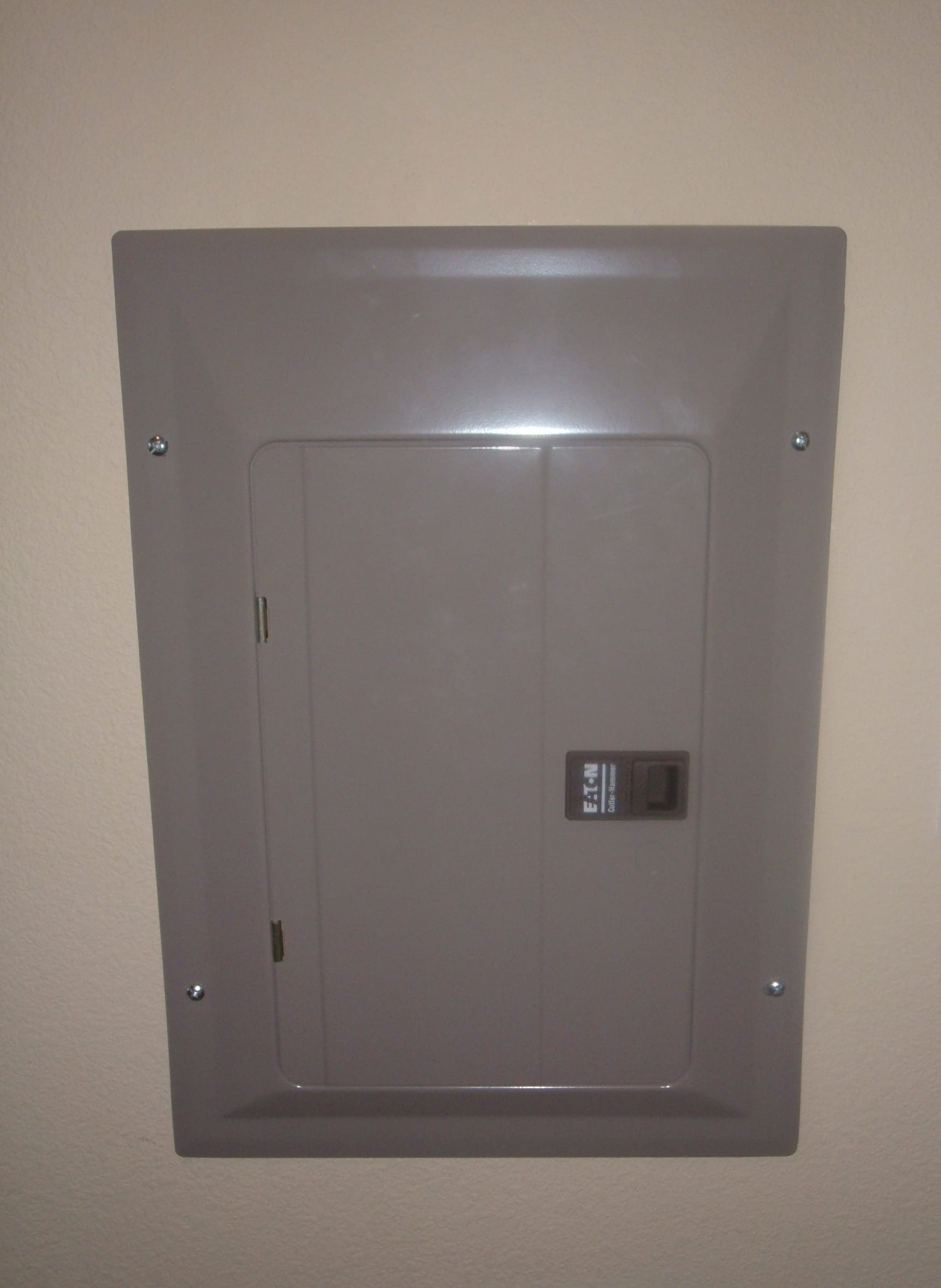
Kilns must not share a circuit with any other device. Sharing one is a wiring hazard on its own: a kiln draws near its full rated amperage for hours at a time, and stacking another appliance onto that circuit risks overheating wire and connections regardless of what’s firing. A shared circuit that trips also disrupts a temperature ramp, which can damage work or take the kiln through a rapid thermal shock.
Which receptacle each kiln uses
The Skutt kilns here and the 240-volt single-phase L&L e23T all use the NEMA 6-50 receptacle, a common 240-volt, 50-amp straight-blade plug also used for welders, large shop equipment, and some EV chargers. Many garages and shops already have this receptacle installed. If your space has a NEMA 6-50 outlet on a 50-amp or 60-amp circuit, the KM-1018, KM-1027 or e23T can connect to it after the electrician confirms the breaker and wire are properly sized.
Three-phase versions are different: the 240-volt three-phase e23T draws 27.7 amps on a 40-amp breaker and ships with a NEMA 15-50 cordset. Three-phase power is rare in homes, so check which version a used kiln is before you wire for it.
The Paragon Caldera uses a standard NEMA 5-15 (120-volt, 15-amp) plug. It can plug into any standard household outlet. A dedicated circuit is still recommended to avoid tripping a shared breaker during a multi-hour firing, but no special receptacle is required.
Electrical installation checklist
A typical dedicated 240-volt kiln circuit runs $300 to $800 or more. The range depends on breaker panel capacity, the run distance from panel to kiln location, local permit requirements, and labor rates in your area. Installations that need a panel upgrade or a long run through finished walls land at the high end. An electrician’s assessment is the right first step: the specs above tell them exactly what circuit to build.
Before the electrician arrives:
- Confirm kiln amperage draw and breaker size from the manufacturer spec sheet (see table above, or the individual kiln review).
- Measure the run distance from the main service panel to the kiln location. Longer runs may require a larger wire gauge than the manufacturer minimums.
- Check panel capacity. A 60-amp circuit requires a 60-amp slot in the breaker panel. If the panel is already at capacity, a panel upgrade is the prerequisite.
- Confirm receptacle type. Order the correct receptacle (NEMA 6-50 for every 240-volt single-phase kiln in the table above) before the installation visit. Leviton’s 5374-S00 is an industrial-grade 6-50R. Leviton warns it is not for single-gang boxes, mud rings or box extenders, so the electrician should plan a larger box for it.
- Check local permit requirements. Most jurisdictions require a permit for new circuit installation; the electrician typically handles permit filing.
Planning for a future kiln upgrade
If you are installing a circuit for a KM-1018 now and think you may upgrade to a KM-1027 later, run 60-amp wiring from the start. The wire gauge is the expensive part of a circuit installation. A 60-amp wire run supports both a 50-amp breaker (for the KM-1018 today) and a 60-amp breaker (for the KM-1027 later) without pulling new wire. The breaker swap costs around $50 in parts; the wire pull costs $300 or more.
For individual model electrical specs in full context, see the KM-1027 review, KM-1018 review, KM-818 review, L&L e23T review, and Paragon Caldera review. For the Skutt KM-1027 versus KM-1018 electrical comparison, see KM-1027 vs KM-1018.