kiln-reviews 6 min read
Paragon Caldera Review: Cone 10 on a 120V Outlet
The Paragon Caldera reaches cone 10 on a standard 15-amp 120-volt circuit with no special wiring. Verified specs, cost to fire, and who this small kiln serves.
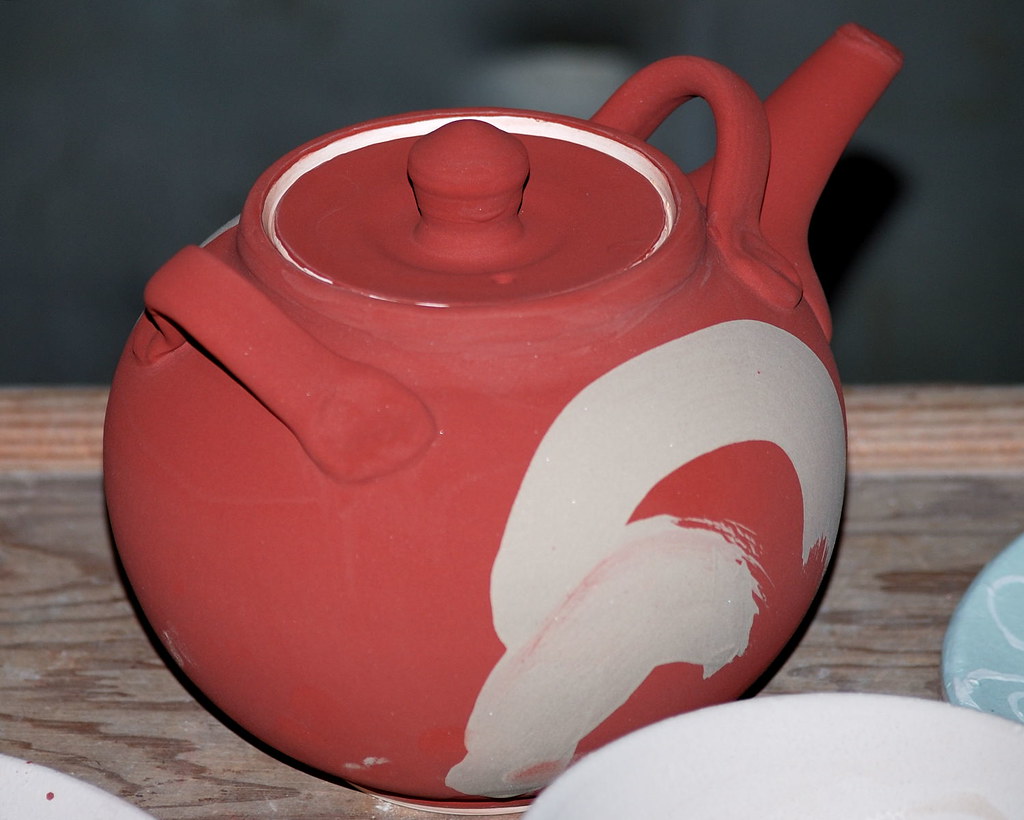
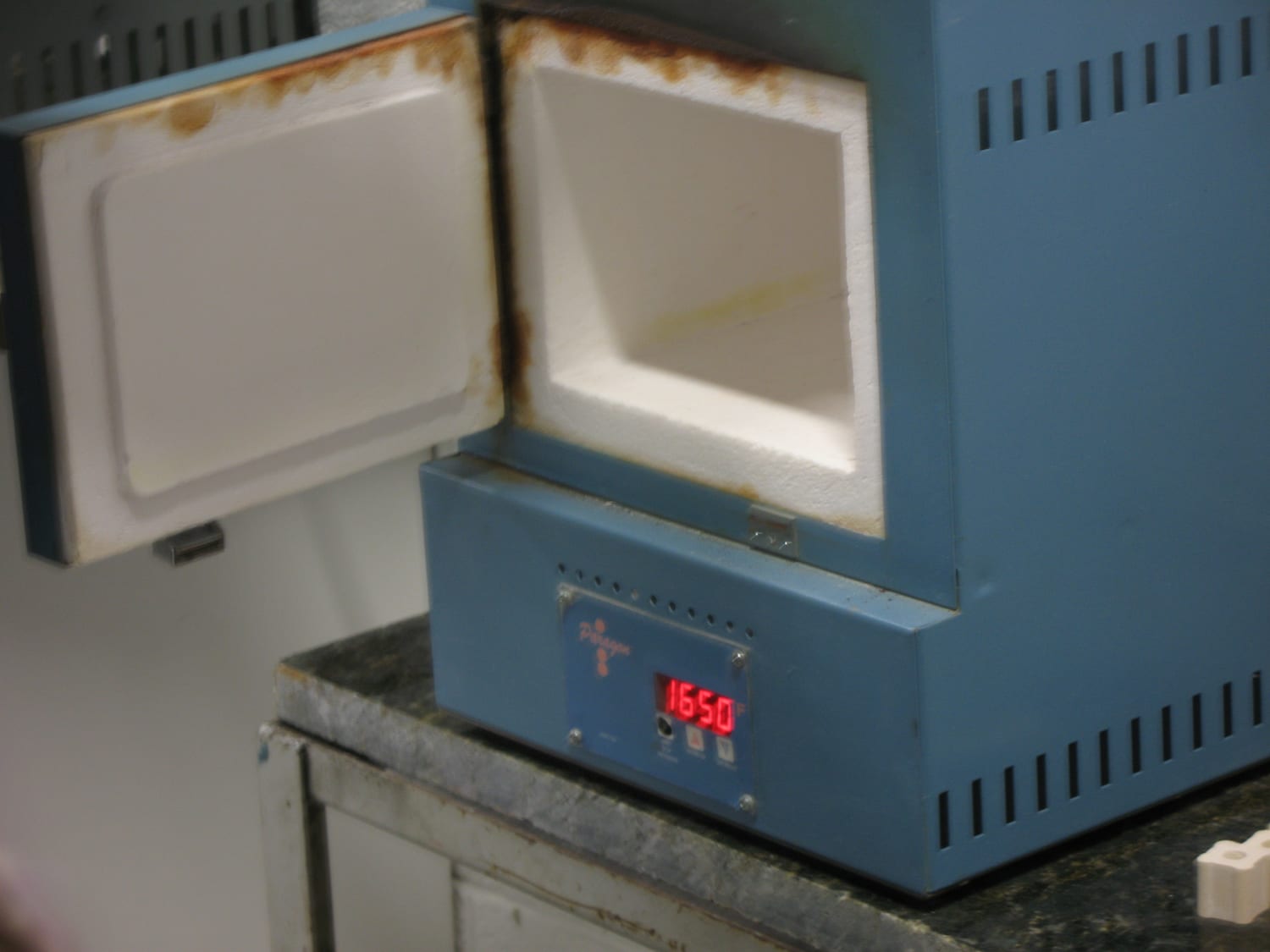
The Paragon Caldera reaches Cone 10 on a standard 120-volt household outlet. No electrician, no 240-volt circuit, no NEMA 6-50 receptacle. It draws 14 amps, plugs into any 15-amp outlet in your home, and fires a small chamber to full high-fire temperatures. The Ceramic Shop was selling it at $1,620 against an $1,800 list on 1 August 2026.
That single fact separates it from every other kiln in this guide.
Here is the number nobody puts on the product page
A glaze firing in the Caldera costs $0.77. A bisque costs $0.46. A complete bisque-plus-glaze cycle costs $1.24 in electricity.
The Caldera is not a production kiln. But as a test kiln, a jewelry kiln, or a second firing station for specialty work, the operating cost is negligible.
Specifications
| Specification | Value |
|---|---|
| Interior dimensions | 8” W x 8” D x 6.75” H |
| Interior volume | 0.25 cu ft (jewelry and small sculpture scale) |
| Maximum temperature | Cone 10 (2,350°F / 1,290°C) |
| Voltage | 120V |
| Amperage draw | ~14A |
| Wattage | 1,680W (1.68 kW) |
| Circuit requirement | Standard 15A or 20A dedicated circuit |
| Chamber | 2.5” insulating firebrick |
| Controller | Digital, but dealers name it differently (see below) |
| Warranty | 1 year |
| Price (The Ceramic Shop, August 2026) | $1,620 sale / $1,800 list |
The electrical picture
The Caldera draws 14 amps at 120 volts. A 15-amp dedicated circuit is the minimum; a 20-amp circuit is better and leaves room for other small loads on the same circuit if needed. No special outlet type is required: a standard NEMA 5-15 (the outlet behind your desk) handles the Caldera.
This is genuinely the only kiln capable of Cone 10 that you can install in a spare bedroom, an apartment studio, or a shared craft space with standard house wiring. The limitation is chamber size, not temperature capability.
One practical note: the Caldera fires a small volume of material quickly. Because the thermal mass is low, temperature rise rates are fast. The digital controller manages this well, but a fast kiln is less forgiving of loosely-applied glaze or very thick pieces.
Which controller does the Caldera actually ship with?
Ask your dealer in writing, because the listings do not agree. The Ceramic Shop, checked 1 August 2026, says every Caldera comes with the Sentinel TouchXpress touchscreen. D&L Art Glass, checked the same day, names the three-key Sentry Xpress. Older references say the twelve-key Sentry 2.0.
Those are materially different devices, and the difference shows up the first time you write a custom ramp-and-hold schedule. Paragon cannot settle it for you at the moment: paragonweb.com returns a hosting placeholder instead of product pages, and their store blocks automated retrieval. Confirm the controller name, the number of stored programs, and the segments per program before you order.
What fits inside
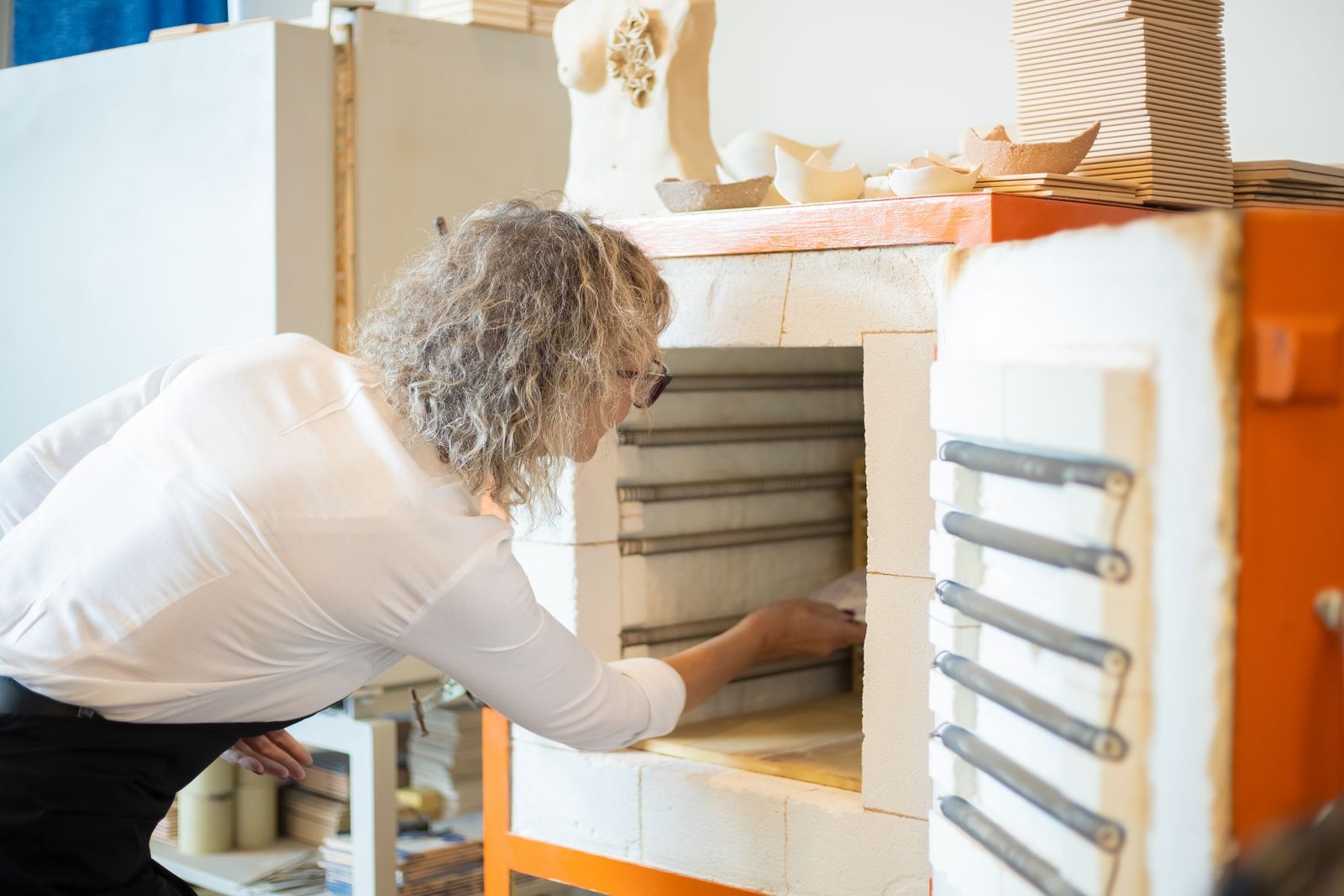
The Caldera’s chamber accommodates:
- Metal clay jewelry and pendants
- Small test tiles (the most common use)
- Small sculptural pieces up to roughly 6 inches
- Beads and small decorative objects
- Small porcelain or stoneware pieces for specialized work
It does not accommodate mugs, bowls, plates, or any standard functional tableware. If you are expecting to fire functional pottery, the Caldera is not the kiln to buy. The Skutt KM-818 is the smallest practical kiln for functional ware production.
Who uses the Caldera and why
Jewelers working in metal clay. Precious metal clay requires specific firing temperatures and schedules. The Caldera’s small chamber and programmable controller handle fine metal clay work without the oversized interior of a standard kiln.
Potters running glaze tests. Firing 20 test tiles per cycle rather than occupying a large kiln for testing is efficient and economical. At $0.46 per bisque and $0.77 per glaze firing, a rigorous glaze development program costs a few dollars per month in electricity.
Studio potters who need a second kiln. Some work benefits from a separate firing station. The Caldera fits next to a large kiln, runs independently, and handles specialty work without occupying the main kiln.
Anyone without 240V access. An apartment studio, a shared craft room, a basement with only a 120V panel nearby: the Caldera is often the only viable option in these settings.
Ventilation in a small space
The Caldera fires less material per cycle than a full-size kiln, which means less total fume output per firing. That does not mean ventilation is optional. Clay body burnout and glaze offgassing still occur, and in a small space those fumes concentrate quickly.
A low-temperature hold early in the schedule lets burnout fumes escape before the kiln climbs, and every controller Paragon fits to this kiln can be programmed to do it. Even so, position the Caldera near a window or exhaust fan. Do not fire it in an enclosed space without airflow. Our kiln ventilation guide covers options for small-space setups.
Cost to fire
Based on the Caldera’s 1.68 kW rating at a 50 percent average duty cycle; rate from the EIA, data for May 2026.
| Firing | Duration | kWh used | Cost at $0.1844/kWh |
|---|---|---|---|
| Bisque (Cone 04) | ~3 hr | 2.52 kWh | $0.46 |
| Glaze (Cone 6) | ~5 hr | 4.20 kWh | $0.77 |
| Both combined | ~8 hr | 6.72 kWh | $1.24 |
Who should buy something else
You want to make functional pottery. The Caldera is not the right size for mugs, bowls, or any standard tableware. The smallest practical functional-ware kiln is the Skutt KM-818 at 2.6 cubic feet. If you need 240V wiring anyway, a small Skutt or similar kiln gives you far more firing flexibility.
You are a beginner potter looking for your first kiln. The Caldera’s chamber is too small to develop throwing skills through production. A beginning potter needs to fire multiple pieces per load to learn glaze application and firing behavior across piece types. Start with the KM-818 or see our home studio kilns guide for more options.
You need production volume. The Caldera fires one small load at a time. There is no configuration that makes it a production tool for quantities of work.
Verdict
The Paragon Caldera is genuinely useful in its specific context. As a jewelry kiln, a test kiln, or a second firing station in a space with limited electrical access, it is the only Cone 10 option that plugs into a standard wall outlet. At $1,620 against an $1,800 list at The Ceramic Shop (verified 1 August 2026), it is priced below any comparable kiln in the 240V class.
Know what you are buying. The Caldera’s chamber is small by design. Used for what it is actually good at, it is an excellent kiln. Used as a substitute for a functional pottery kiln, it will frustrate you quickly. See the home studio kilns guide if you are still deciding which size is right for your work.