kiln-comparisons 5 min read
KM-1027 vs KM-1018: Skutt's Size Decision in Plain Numbers
KM-1027 gives 7.3 cubic feet on a 60-amp circuit; KM-1018 gives 4.6 on a 50-amp circuit. Same cone-10 rating, different size and electrical load. Which fits?

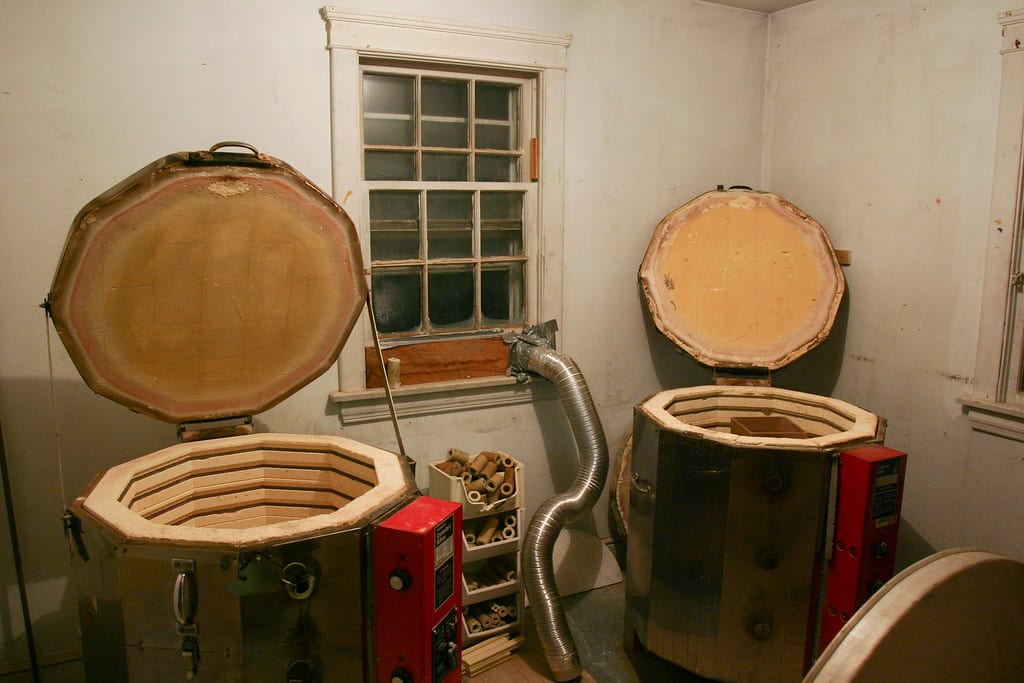
The Skutt KM-1027 holds roughly 7.3 cubic feet and needs a 60-amp circuit. The KM-1018 holds 4.6 cubic feet and runs on 50 amps. Both fire to cone 10, both use the 10-sided sectional design, and both are available through the same dealers. The decision between them is a size and electrical question, not a quality one. This page is the comparison table.
Pricing at Sheffield Pottery in June 2026: KM-1018 at $2,923 on sale, KM-1027 at $3,500 to $4,600 on sale depending on configuration.
The comparison table
Every spec that changes between the two models. Numbers verified against Krueger Pottery Supply and Sheffield Pottery, June 2026. Cost-to-fire figures use L&L’s segment duty-cycle method on each kiln’s rated wattage; rate from the EIA, March 2026.
| Specification | KM-1027 | KM-1018 |
|---|---|---|
| Interior volume | ~7.3 cu ft (6.4 usable per Sheffield) | 4.6 cu ft |
| Interior dimensions | 23” x 23” x 27” deep | 24” x 24” x 18” deep |
| Maximum temperature | Cone 10 (2,350°F) | Cone 10 (2,300°F) |
| Amperage draw | 48A | 39.4A |
| Wattage | 11,520W (11.52 kW) | 9,456W (9.46 kW, calculated) |
| Required breaker | 60A dedicated | 50A dedicated |
| Wire gauge | #6 AWG copper | #6 AWG copper |
| Receptacle | NEMA 6-50 | NEMA 6-50 |
| Elements | Bifilar, multiple rings | 4 rings, bifilar |
| Controller | KilnMaster (JD-100 optional) | FireBox (JD-100 optional) |
| Warranty | 2-year limited (elements excluded) | 1 year |
| Price (Sheffield, June 2026) | $3,500-$4,600 sale | $2,923 sale |
| Bisque firing cost (Cone 04) | $9.24 | $7.58 |
| Glaze firing cost (Cone 6) | $15.41 | $12.65 |
| Full bisque + glaze cycle | $24.65 | $20.23 |
Specs verified June 2026 against Krueger Pottery Supply and Sheffield Pottery (authorized Skutt dealers). Wattage for KM-1018 calculated from verified amperage (39.4A x 240V = 9,456W) because Skutt lists the 1018 by amperage only.
What the volume difference means in practice
The KM-1027 fires roughly 60 percent more volume per load than the KM-1018. For a solo potter throwing functional ware, that translates to the difference between fitting a full mixed glaze load in a single firing versus splitting the same work across two.
A 4.6 cubic foot chamber holds on the order of 20 to 30 mugs depending on size and stacking. A 7.3 cubic foot chamber holds on the order of 38 or more. For a potter who fires twice a week, the KM-1027 can consolidate four weekly loads into two or three, which extends element life and reduces energy cost per piece.
The KM-1018’s 24-inch interior width is slightly wider than the KM-1027’s 23-inch width, but the 1027 is 9 inches deeper (27 inches versus 18 inches). Depth is what matters most for tall pieces: the KM-1027 handles tall vases and sculptural work standing upright where the KM-1018 would require those pieces to fire at an angle or not at all.
The electrical difference
The KM-1018 draws 39.4 amps, which fits inside a 50-amp breaker’s continuous-load allowance (50 x 0.80 = 40 amps). The KM-1027 draws 48 amps, which exceeds that ceiling and requires a 60-amp breaker (60 x 0.80 = 48 amps, exactly at the limit).
Both kilns use #6 AWG copper and a NEMA 6-50 receptacle. The wire gauge is the same. The difference is only the breaker size, which means an upgrade from a 50-amp circuit to a 60-amp circuit (if you ever switch kilns) requires changing the breaker and verifying that the wire run is adequate, not pulling new wire in most cases.
If your garage panel has a 60-amp slot available, running 60 amps from the start lets you put in either kiln without future electrical work. If you have a 50-amp slot and adding a 60-amp circuit requires a panel upgrade, the KM-1018 is the practical choice unless you are committed to the 1027’s larger volume.
See the kiln electrical requirements guide for the full by-model table.
The firing cost difference
Per firing, the KM-1018 saves $2.76 on a cone-6 glaze load and $1.66 on a bisque. At 50 glaze firings per year, that is $138 in annual electricity savings.
The per-piece cost is similar once you account for load size. The KM-1018 fires fewer pieces per load at lower cost per firing; the KM-1027 fires more pieces per load at higher cost per firing. Over a full load in either kiln, the electricity cost per piece is in the same range.
The more meaningful electricity cost comparison is whether a potter fills their kiln regularly. A KM-1027 fired half-full costs more per piece than a KM-1018 fired full. Matching kiln size to actual production volume is the real optimization.
Price difference and what it pays for
The KM-1018 at $2,923 on sale versus the KM-1027 at $3,500 to $4,600 leaves $600 to $1,700 between them. At the lower end of that spread, the upgrade cost equals roughly one year of the firing cost savings from the larger kiln’s higher per-load efficiency. At the higher end, the price gap funds a full furniture kit, a digital controller upgrade, a ventilation system, and still leaves money over.
The KM-1027 also carries a 2-year warranty versus the KM-1018’s 1 year. For a kiln expected to run for 15 to 20 years, neither covers the productive life of the machine, but the extra year of coverage is worth noting.
Which kiln to buy
Start with the KM-1018 if your panel can spare a 50-amp but not a 60-amp circuit, your studio space is genuinely tight, or your production volume is not yet consistent enough to reliably fill a 7-cubic-foot kiln. The KM-1018 is not a compromise on quality; it is the same kiln at smaller scale.
Start with the KM-1027 if your panel has a 60-amp slot available, you are already producing enough work to fill a larger kiln, or you want to avoid a circuit upgrade in two years when your practice grows. Read the full KM-1027 review for the complete owner picture.
Still deciding on size? The first kiln buying guide frames the size decision starting from studio space and electrical access. The KM-1018 review has the detailed spec table and owner reports for the smaller kiln. For comparison against L&L at this capacity range, see the Skutt vs L&L comparison.