kiln-comparisons 10 min read
Paragon Caldera vs Skutt FireBox: The 8-Inch Decision
Both plug into a wall outlet with an 8 by 8 inch chamber. The Caldera reaches cone 10 with more depth. The FireBox 8x6 stops at cone 6 and costs $421 less.
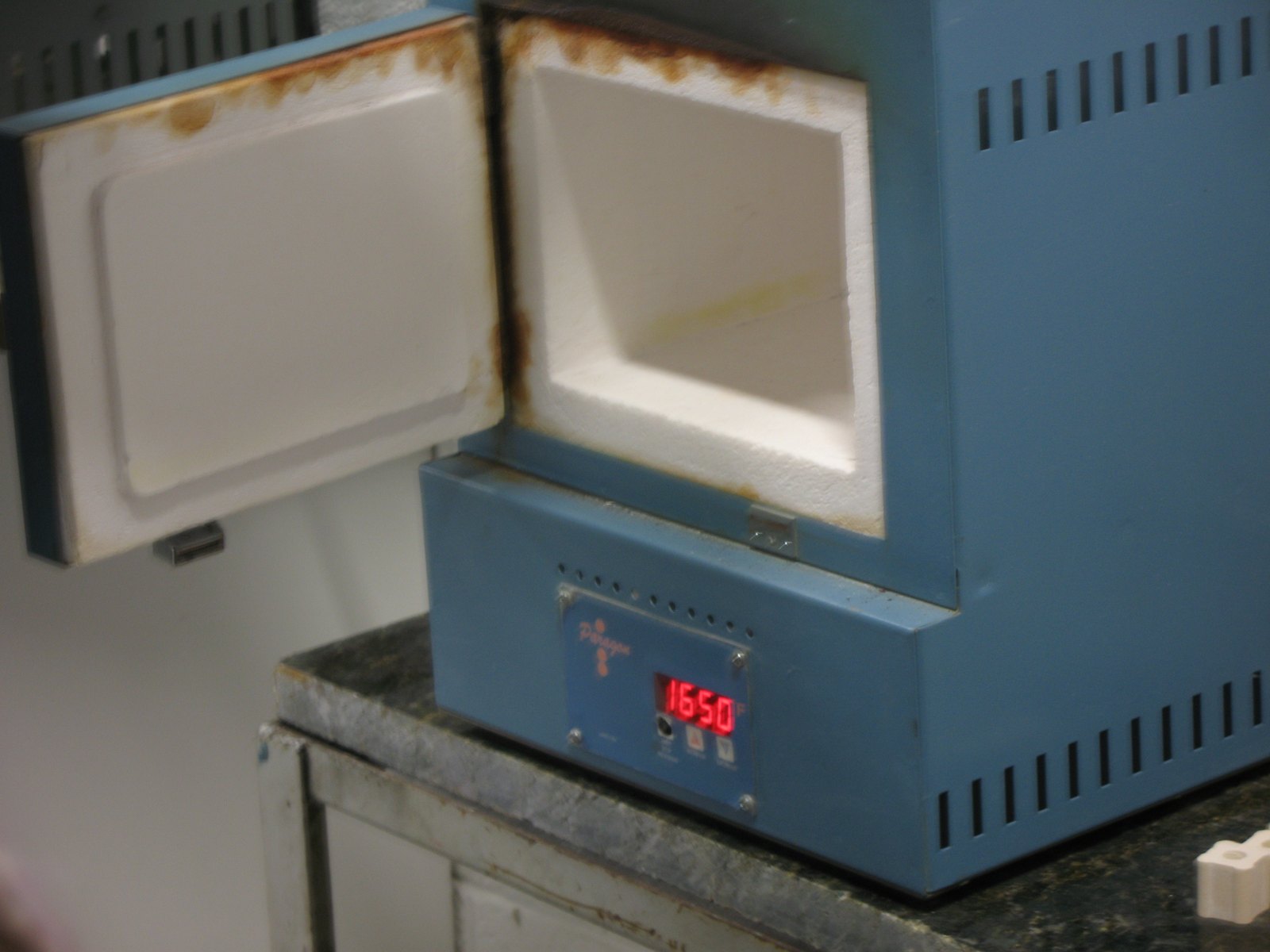
Buy the Paragon Caldera if you need to fire above cone 6: 2,350F in a 6.75 inch chamber, $1,620. Buy the Skutt FireBox 8x6 if you do not, because it does nearly the same job in nearly the same box for $1,199. The FireBox 8x4 is the awkward third option: cone 10, but only 4.5 inches deep.
That $421 gap is the entire decision, and for most buyers it buys a number they will never use.
The comparison table
Every figure below was read from the manufacturer’s own specification table or a dealer’s live listing on 1 August 2026. Cost to fire is computed further down.
| Specification | Paragon Caldera | Skutt FireBox 8x6 LT | Skutt FireBox 8x4 LT |
|---|---|---|---|
| Chamber | 8 W x 8 D x 6.75 H in | 8 x 8 x 6.5 in | 8 x 8 x 4.5 in |
| Volume | 0.25 cu ft | 0.2 cu ft published | 0.2 cu ft published |
| Maximum temperature | 2,350F | 2,250F | 2,350F |
| Cone rating | Cone 10 | Cone 6 | Cone 10 |
| Voltage | 120 V | 115 V | 115 V |
| Amperage | 14 A | 15 A | 15 A |
| Wattage | 1,680 W | 1,800 W | 1,725 W |
| Receptacle | NEMA 5-15P | NEMA 5-15 | NEMA 5-15 |
| Brick | 2.5 in insulating firebrick | not published | not published |
| Controller | Sentinel TouchXpress | Mini Touchscreen | Mini Touchscreen |
| In the box | steel stand, reversible base | shelf, 3 posts, kiln wash | not published |
| Expandable | BC, X and E collars | no | no |
| List price | $1,800 | $1,490 | $1,410 |
| Dealer price, 1 Aug 2026 | $1,620 | $1,199 | not listed |
| Glaze firing, cone 6 | $0.77 | $0.83 | $0.80 |
The two kilns most people are choosing between, the Caldera and the 8x6, differ by 0.25 inches of chamber depth and 120 watts. They are very nearly the same box. What separates them is a temperature ceiling and $421.
Why does the FireBox 8x6 stop at cone 6?
Because all three of these kilns run on a 15-amp household circuit, and at 115 to 120 volts that caps the whole machine around 1,800 watts. Nobody gets to add power. The only remaining levers are how much chamber that power has to heat and how well the brick holds what it makes.
The 8x6 has 416 cubic inches to heat with 1,800 watts. The 8x4 has 288 with 1,725 watts. That is 4.33 watts per cubic inch against 5.99, and it maps straight onto the published ceilings: 2,250F for the deeper kiln, 2,350F for the shallow one.
The Caldera then breaks the pattern, and the honest reading is that power density is not the only variable. Paragon’s kiln has 432 cubic inches and 1,680 watts, which is 3.89 watts per cubic inch, the lowest of the three, and it still claims 2,350F. The Ceramic Shop’s listing gives the likely reason in one line: a 2.5 inch insulating firebrick chamber. Skutt does not publish a brick thickness for the FireBox on either page. Insulation is doing work that wattage cannot.

What actually needs more than cone 6?
Very little of what these kilns get bought for. Here is the headroom each one has against the processes people actually run in a small kiln.
| What you are firing | Temperature it needs | Caldera, 2,350F | FireBox 8x6, 2,250F | FireBox 8x4, 2,350F |
|---|---|---|---|---|
| Tack fuse, glass | roughly 1,350 to 1,400F | 950F to spare | 850F to spare | 950F to spare |
| Full fuse, glass | roughly 1,450 to 1,500F | 850F | 750F | 850F |
| Enamel on copper | roughly 1,400 to 1,500F | 850F | 750F | 850F |
| Silver clay sintering | up to about 1,650F | 700F | 600F | 700F |
| Bisque, cone 04 | 1,945F | 405F | 305F | 405F |
| Glaze, cone 6 | 2,232F | 118F | 18F | 118F |
| Glaze, cone 10 | 2,345F | 5F | misses by 95F | 5F |
Cone temperatures are Orton’s self-supporting equivalents at the medium 108F per hour rate, retrieved 1 August 2026. Kiln ceilings from Skutt’s specification table and The Ceramic Shop’s Caldera listing.
Two things jump out of that table, and neither appears in anyone’s marketing.
For glass and metal clay the cone rating is irrelevant. Full fuse happens around 1,500F. Silver clay sinters at 1,650F. Every kiln here clears those by 600 degrees or more. If jewellery and fusing are the whole job, you are paying $421 extra for a number that never gets used.
Cone 10 on a 120-volt kiln is nominal, not comfortable. Orton puts cone 10 at 2,345F at the medium rate and 2,381F on a fast finish. A kiln with a 2,350F plate rating clears the first by five degrees and misses the second by 31. Both the Caldera and the 8x4 are genuinely cone 10 kilns, but only with a slow final ramp and a witness cone on the shelf. Treat “cone 10” here as the top of the range rather than a working temperature. Our pyrometric cones guide has the full chart across all three rates.
The same reading makes the 8x6’s cone 6 rating tighter than it looks. Eighteen degrees is the whole margin at the medium rate, and a fast finish moves cone 6 to 2,269F, which the kiln misses. Fire it slowly at the top and put a cone in.
Which controller is better?
Skutt’s, comfortably, and it is not close on features.
The Mini Touchscreen holds 30 programs with 8 ramp-and-hold segments each, and gives you three preset modes: GlassFire takes a technique and a speed, ConeFire takes a cone value and a hold, PMC takes the clay type. Mid-firing you get Add Temp, Add Time and Anneal Now.
The Caldera’s controller is where this comparison hits a wall, and it is worth being straight about it. Three sources give three different names. The Ceramic Shop’s listing, read 1 August 2026, says every Caldera ships with the Sentinel TouchXpress touchscreen. D&L Art Glass, read the same day, says Sentry Xpress, which is Paragon’s three-key controller. Older references name the twelve-key Sentry 2.0.
These are materially different devices. The three-key Sentry Xpress and the touchscreen Sentinel are not interchangeable, and the difference shows up the first time you try to write a custom ramp-and-hold schedule. Paragon’s own site cannot settle it: paragonweb.com currently returns a hosting placeholder rather than product pages, and their store blocks automated retrieval. So get the controller name in writing from your dealer before you order, and if the schedule flexibility matters to you, ask how many segments and stored programs it has. The kiln controller guide explains why that answer changes what the kiln can do.
What does the Caldera give you that Skutt does not?
Two things, and they are real.
Modular collars. Paragon sells three expansion collars that stack onto the base kiln: the BC bead collar, which adds 4.5 inches of height plus a 7.5 by 2 inch bead door for annealing mandrels; the X collar, same height without the door; and the E enameling collar, which adds 6.75 inches. That last one doubles the chamber height. Nothing in the FireBox line expands, so an 8x6 is 6.5 inches deep for its whole life. Note the bead collar drops the maximum temperature to 2,000F per D&L’s listing, so height and heat are a trade.
A reversible firebrick base. The Caldera’s floor can be flipped when the top surface wears, which on a kiln where work sits close to the floor is a genuine service item rather than a brochure line.
Against that, the FireBox 8x6 arrives with a shelf, three posts and a bag of kiln wash in the carton. The Caldera comes with a steel stand. Neither is decisive, but if you are pricing a first firing rather than a kiln, add a furniture kit to the Caldera’s column.
What do they cost to run?
Almost nothing, and the difference between them rounds to pocket change.
Elements cycle rather than running flat out, so energy is rated wattage times hours times an average duty cycle. Figures below use a 50 percent average duty cycle, which is the basis every cost table on this site uses, and the US average residential rate of 18.44 cents per kilowatt hour from the EIA’s May 2026 data, released 23 July 2026.
| Firing | Hours | Caldera, 1.68 kW | FireBox 8x6, 1.80 kW | FireBox 8x4, 1.725 kW |
|---|---|---|---|---|
| Full fuse plus anneal | 5 | $0.77 | $0.83 | $0.79 |
| Bisque, cone 04 | 3 | $0.46 | $0.50 | $0.48 |
| Glaze, cone 6 | 5 | $0.77 | $0.83 | $0.80 |
| Silver clay, 2 hr hold | 3 | $0.46 | $0.50 | $0.48 |
| One hundred glaze firings | 500 | $77 | $83 | $80 |
Fire either kiln twice a week for a year and the electricity gap between them is under a dollar. Anyone choosing on running cost is solving the wrong problem.
Verdict, by what you actually make
Glass fusing, enamel, silver clay, beads. Buy the FireBox 8x6 at $1,199. Nothing in that list goes above 1,700F, the Mini Touchscreen writes the schedules for you, and the shelf and wash are already in the box. The cone 10 rating you would be paying for on a Caldera does nothing for any of this work.
Ceramic glaze testing at cone 6. Either, with a preference for the Caldera if the budget stretches. Eighteen degrees of headroom on the 8x6 is enough on a slow finish and thin on a fast one. Put a cone 6 witness cone on the shelf whichever you buy.
Anything above cone 6. The Caldera, or the FireBox 8x4 if you can live with 4.5 inches of height. Both are five degrees clear of Orton’s medium-rate cone 10, so fire the last stretch slowly. For a fuller look at the Caldera on its own terms, see the Paragon Caldera review, and for the FireBox line the Skutt FireBox review.
Work that needs height more than heat. The Caldera, because the E collar adds 6.75 inches and nothing in the FireBox range grows.
Who should buy neither
You want to fire mugs and bowls. Neither of these does functional ware, and no shelf arrangement changes that. The smallest kiln in the Skutt range that fires tableware is the KM-818 at 2.6 cubic feet, and it needs a 240-volt, 40-amp circuit. That trade is worked through in Caldera versus KM-818.
You already have 240 volts available. Then the whole premise of this page evaporates. Skutt’s GlazeTech is $2,330 at list, reaches cone 10, and gives you a 14.5 by 14.5 inch chamber, which is more than four times the space of an 8x6. If your panel can take it, start at the small kilns guide instead.
You want a bigger fusing kiln on a plug. Skutt’s FireBox 14 holds a full square foot of tile on 115 volts for $1,598 at The Ceramic Shop. It tops out at 1,700F, so it is glass only, which for a fuser is not a limitation at all. The glass fusing kiln guide works through the schedules that decision depends on.
Before you order either one, ask the dealer two questions in writing: which controller is actually in the box, and what the return terms are if the kiln lands short of the cone on its plate. On a kiln with 18 degrees of margin, the second question is not paranoid.
The accessories in Further reading are consumables and test gear only. Elements, thermocouples and relays go through Skutt, Paragon or an authorised distributor, because those parts have to match the model, voltage and phase. As an Amazon Associate we earn from qualifying purchases.